Saudi Vanlife Arabic: What to Say for Fuel, Food, and Overnight Stops
Driving through Saudi Arabia by campervan or road-trip vehicle means you will often handle small conversations yourself: filling up with fuel, buying food, asking for water, checking directions, and finding...




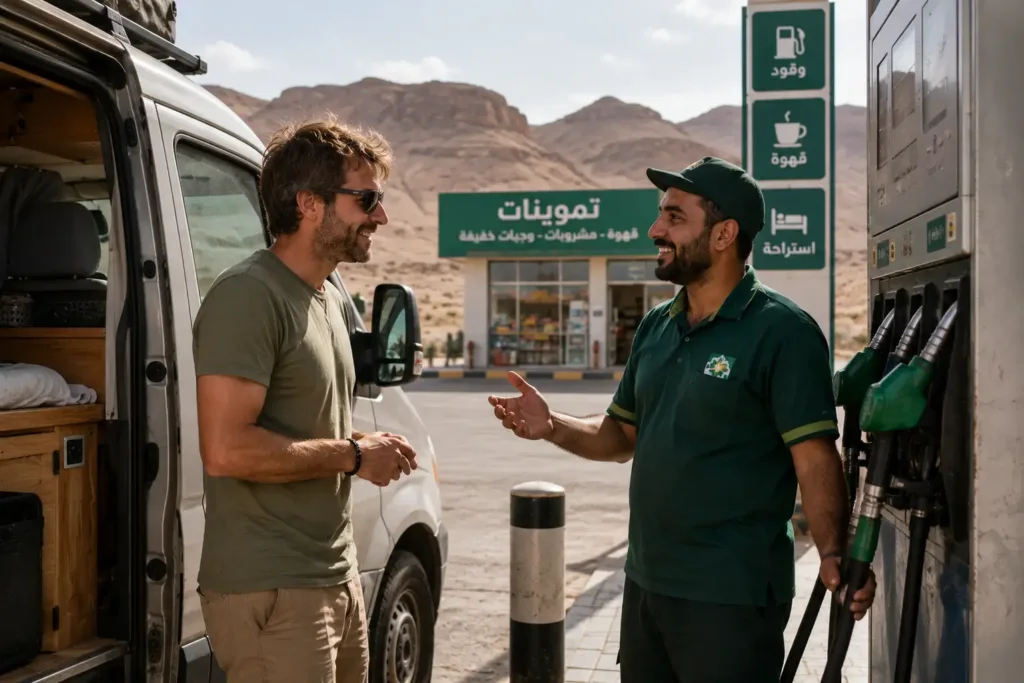
Saudi Vanlife Arabic is the focus of this EasyArabicNow guide, with practical travel context and useful planning tips for your trip.
Driving through Saudi Arabia by campervan or road-trip vehicle means you will often handle small conversations yourself: filling up with fuel, buying food, asking for water, checking directions, and finding somewhere appropriate to stop for the night.
A few simple Saudi Arabic phrases make these moments much easier.
At a fuel station, start with عبّي فل، لو سمحت, meaning “Fill it up, please.” Say it: Abbi full, law samaht.
For an overnight stop, one of the most useful questions is ممكن نوقف هنا الليلة؟, meaning “Can we park here tonight?” Say it: Mumkin nowaggef hina al layla?
Useful Saudi Arabic for Vanlife
| Arabic | English | Say it |
|---|---|---|
| عبّي فل، لو سمحت | Fill it up, please | Abbi full, law samaht |
| وين أقرب محطة بنزين؟ | Where is the nearest gas station? | Wain agrab mahattat banzeen |
| عندكم موية؟ | Do you have water? | Indakom moyya |
| وين أقرب مطعم؟ | Where is the nearest restaurant? | Wain agrab matam |
| أبي أكل سفري | I want food to go | Abi akel safari |
| ممكن نوقف هنا الليلة؟ | Can we park here tonight? | Mumkin nowaggef hina al layla |
| فيه مكان ننام فيه؟ | Is there a place where we can sleep? | Fee makan nanaam feeh |
| وين أقرب حمام؟ | Where is the nearest restroom? | Wain agrab hammam |
| عندي مشكلة في الكفر | I have a problem with the tire | Indi mushkila fil kafar |
| وين أقرب ورشة؟ | Where is the nearest repair shop? | Wain agrab warsha |
At the Fuel Station
Fuel stops are an easy place to use Arabic because the conversation is usually short.
If you want a full tank, say عبّي فل، لو سمحت, meaning “Fill it up, please.” Say it: Abbi full, law samaht.
If you are running low and need directions, ask وين أقرب محطة بنزين؟, meaning “Where is the nearest gas station?” Say it: Wain agrab mahattat banzeen?
Keep the interaction simple. Pointing to the fuel gauge or showing your route on your phone can help if you need more than the phrase alone.
Finding Water and Food
Water matters on any Saudi road trip, especially when you are traveling long distances.
At a shop, station, or roadside stop, ask عندكم موية؟, meaning “Do you have water?” Say it: Indakom moyya?
If you are hungry and looking for somewhere nearby, ask وين أقرب مطعم؟, meaning “Where is the nearest restaurant?” Say it: Wain agrab matam?
For takeaway food, say أبي أكل سفري, meaning “I want food to go.” Say it: Abi akel safari.
You may find that a simple food stop becomes one of the most enjoyable parts of the drive. Ask what people recommend, try a local dish, and do not be afraid to order by pointing when the menu is unfamiliar.
Asking About an Overnight Stop
When you find a place where you might like to stop, ask permission rather than assuming.
Say ممكن نوقف هنا الليلة؟, meaning “Can we park here tonight?” Say it: Mumkin nowaggef hina al layla?
If you are trying to find a suitable place nearby, ask فيه مكان ننام فيه؟, meaning “Is there a place where we can sleep?” Say it: Fee makan nanaam feeh?
The answer may be a campsite, a designated stopping area, or simply directions somewhere more appropriate.
Conditions and local requirements can vary, so asking nearby staff, property owners, or local authorities when relevant is a practical habit.
Toilets and Roadside Comfort
When you have been driving for hours, the most important Arabic phrase may have nothing to do with sightseeing.
Ask وين أقرب حمام؟, meaning “Where is the nearest restroom?” Say it: Wain agrab hammam?
At fuel stations, restaurants, and roadside businesses, this is short and easy to understand.
Vanlife is more enjoyable when you build in time for water, food, shade, rest, and simple comfort stops rather than trying to cover huge distances without breaks.
When Something Goes Wrong
A tire problem is much easier to explain when you know one basic sentence.
Say عندي مشكلة في الكفر, meaning “I have a problem with the tire.” Say it: Indi mushkila fil kafar.
In Saudi spoken Arabic, الكفر is commonly used for a vehicle tire.
Then ask وين أقرب ورشة؟, meaning “Where is the nearest repair shop?” Say it: Wain agrab warsha?
You can point to the tire, engine area, or damaged part while speaking. Even if the conversation continues mostly through gestures, that first sentence tells the person exactly why you need help.
Enjoy the Road
You do not need to memorize every phrase before starting your drive.
Remember عبّي فل، لو سمحت, meaning “Fill it up, please.” Say it: Abbi full, law samaht. Also remember ممكن نوقف هنا الليلة؟, meaning “Can we park here tonight?” Say it: Mumkin nowaggef hina al layla?
With those basics, a smile, and a willingness to ask locals for help, everyday road-trip stops can become some of the most memorable interactions of your journey.
Travel information can change. Recheck important prices, schedules, entry rules, health requirements and local regulations with the relevant official source before relying on them.