Egyptian Arabic: How to Say “No Thanks” Without Sounding Rude
You are walking through a market in Cairo, and a seller offers you something you do not want. Or a restaurant server offers another dish when you are already full....




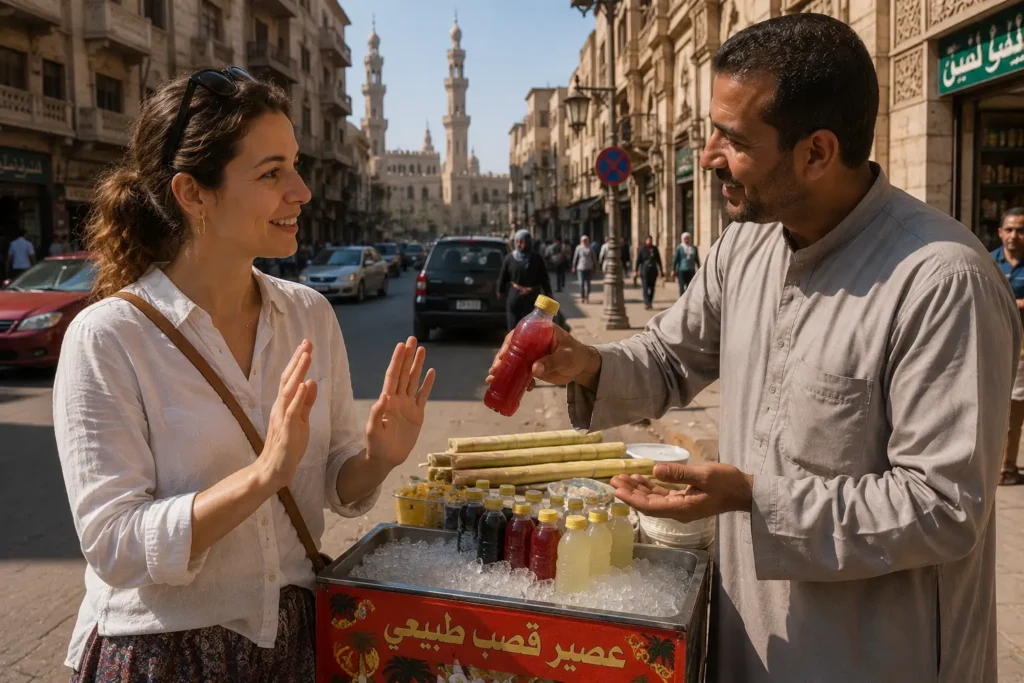
You are walking through a market in Cairo, and a seller offers you something you do not want. Or a restaurant server offers another dish when you are already full.
You do not need a complicated excuse.
In Egyptian Arabic, a friendly لا، شكراً, meaning “No, thank you.” Say it: La shokran., works in a huge number of situations.
Say it calmly, add a smile when appropriate, and keep moving if you need to.
Useful Ways to Say No in Egyptian Arabic
| Arabic | English | Say it |
|---|---|---|
| لا، شكراً | No, thank you | La shokran |
| مش عايز، شكراً | I don’t want it, thank you | Mish ayez shokran |
| خلاص، شكراً | That’s all / Okay, thank you | Khalas shokran |
| كفاية، شكراً | That’s enough, thank you | Kefaya shokran |
| أنا بتفرج بس | I’m just looking | Ana batfarag bass |
| مش محتاج حاجة، شكراً | I don’t need anything, thank you | Mish mehtag haga shokran |
| معلش، لا | Sorry, no | Maalesh la |
| شكراً، مش دلوقتي | Thanks, not now | Shokran mish dilwaqti |
The Easiest Answer Is “La Shokran”
For most travelers, the phrase to remember is لا، شكراً, meaning “No, thank you.” Say it: La shokran.
It is short, polite, and immediately understood.
Use it when someone offers you a souvenir, another drink, a taxi you do not need, or something else you want to decline.
You do not need to sound apologetic. A normal friendly tone is enough.
When You Want to Be Clearer
Sometimes a simple no leads to another offer.
In that case, say مش عايز، شكراً, meaning “I don’t want it, thank you.” Say it: Mish ayez shokran.
This is useful when a vendor is showing you something specific and you want to make your answer clear.
If you simply do not need anything, try مش محتاج حاجة، شكراً, meaning “I don’t need anything, thank you.” Say it: Mish mehtag haga shokran.
There is no need to invent an excuse about money, time, or where you are going next.
When You Are Just Browsing
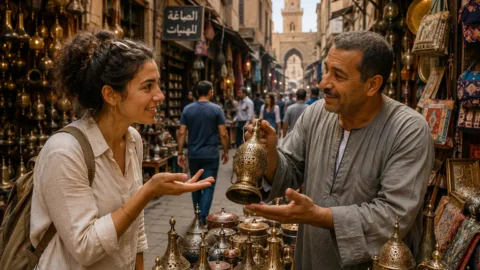
In a market or shop, you may genuinely want to look without buying.
Say أنا بتفرج بس, meaning “I’m just looking.” Say it: Ana batfarag bass.
This is particularly useful in souvenir shops and markets because it tells the seller exactly what you are doing.
You can still ask questions or look around. The phrase simply makes it clear that you have not decided to buy.
When You Have Had Enough
At a restaurant, cafe, or someone’s table, you may be offered more when you are already satisfied.
Say كفاية، شكراً, meaning “That’s enough, thank you.” Say it: Kefaya shokran.
Another very common Egyptian expression is خلاص، شكراً, meaning “That’s all” or “Okay, thank you.” Say it: Khalas shokran.
Both can help you end an offer naturally without sounding abrupt.
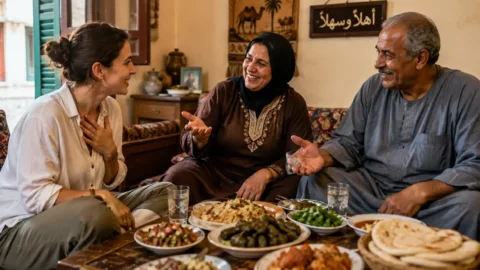
If you are eating with Egyptian hosts, you may notice food being offered more than once. Treat it as hospitality rather than a problem. Smile, thank your host, and repeat your answer if necessary.
When You Mean “Not Now”
Sometimes you are not rejecting something completely. You simply do not want it at that moment.
Say شكراً، مش دلوقتي, meaning “Thanks, not now.” Say it: Shokran mish dilwaqti.
This can work when someone offers you food, a service, or something you might consider later.
For a softer refusal, you may also hear معلش، لا, meaning “Sorry, no.” Say it: Maalesh la.
You Do Not Have to Keep Explaining
Politeness does not mean staying in a conversation you are finished with.
If a vendor continues after you decline, repeat لا، شكراً, meaning “No, thank you.” Say it: La shokran.
Keep your tone calm, stop negotiating if you are not interested, and continue walking.
In most everyday situations, being clear and friendly works better than giving a long explanation.
Remember These Three
Start with لا، شكراً, meaning “No, thank you.” Say it: La shokran.
When shopping, remember أنا بتفرج بس, meaning “I’m just looking.” Say it: Ana batfarag bass.
And when you have had enough food or drink, use كفاية، شكراً, meaning “That’s enough, thank you.” Say it: Kefaya shokran.
Those three phrases will handle a surprising number of everyday situations in Egypt.
Travel information can change. Recheck important prices, schedules, entry rules, health requirements and local regulations with the relevant official source before relying on them.