Beirut Café Arabic: What to Say When Ordering Coffee, Juice, and Breakfast
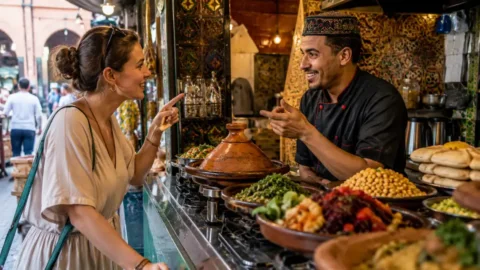
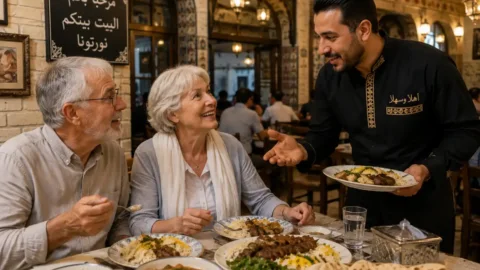
A Beirut café is one of the easiest places to use a little Lebanese Arabic. You can point at the menu, smile, order slowly, and let a few local words...




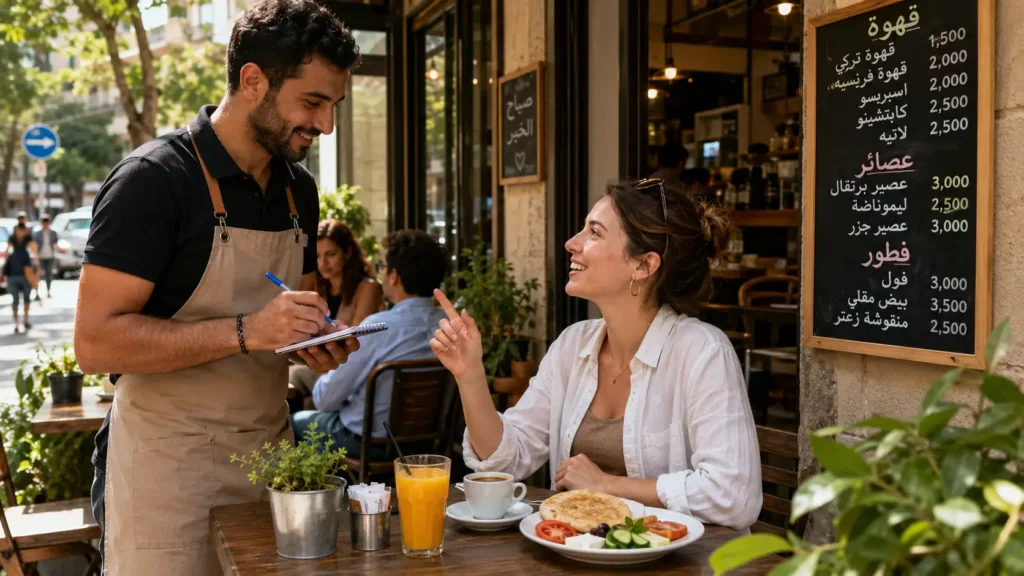
Beirut Café Arabic is the focus of this EasyArabicNow guide, with practical travel context and useful planning tips for your trip.
A Beirut café is one of the easiest places to use a little Lebanese Arabic. You can point at the menu, smile, order slowly, and let a few local words do the rest.
For coffee, fresh juice, manoushe, eggs, or a simple breakfast, you do not need a long conversation. A polite greeting, a clear order, and a thank you are usually enough.
Quick Answer
Start with مرحبا, meaning “Hello.” Say it: Marhaba.
When you are ready to order, say بدي قهوة، لو سمحت, meaning “I’d like a coffee, please.” Say it: Baddi ahwe, law samaht.
In Lebanese Arabic, بدي is one of the most useful café words you can know. It simply lets you say what you want without making the interaction complicated.
Useful Local Phrases
| Arabic | English | Say it |
|---|---|---|
| مرحبا | Hello | Marhaba |
| بدي قهوة، لو سمحت | I’d like a coffee, please | Baddi ahwe, law samaht |
| بدي عصير برتقال | I’d like orange juice | Baddi aseer bortaan |
| شو بتنصحني؟ | What do you recommend? | Shu btensahne |
| بدي منقوشة زعتر | I’d like a zaatar manoushe | Baddi manoushet zaatar |
| بدي بيض | I’d like eggs | Baddi bayd |
| بلا سكر | Without sugar | Bala sukkar |
| مي، لو سمحت | Water, please | Mayy, law samaht |
| الحساب، لو سمحت | The bill, please | El hseb, law samaht |
| شكرا | Thank you | Shukran |
Ordering Coffee
If you simply want coffee, tell the server بدي قهوة، لو سمحت, meaning “I’d like a coffee, please.” Say it: Baddi ahwe, law samaht.
You may be asked what kind you want. Beirut cafés range from traditional neighborhood spots to modern specialty coffee shops, so the choices can vary.
If you prefer your coffee without sugar, say بلا سكر, meaning “Without sugar.” Say it: Bala sukkar.
Do not worry if your pronunciation is not perfect. Say the phrase clearly, then point at the menu if needed. That combination works well almost anywhere.
Ordering Juice
Fresh juice is common at cafés and juice shops, especially orange juice.
To order one, say بدي عصير برتقال, meaning “I’d like orange juice.” Say it: Baddi aseer bortaan.
If you see several juices and are unsure what to choose, ask شو بتنصحني؟, meaning “What do you recommend?” Say it: Shu btensahne.
This is a particularly useful phrase in Beirut because it turns ordering into a small conversation. You may get a suggestion that you would never have picked from the menu yourself.
Breakfast in a Beirut Café
Breakfast can be simple or generous. Depending on the café, you might find manoushe, eggs, labneh, cheese, vegetables, pastries, or other Lebanese breakfast dishes.
For a classic start, say بدي منقوشة زعتر, meaning “I’d like a zaatar manoushe.” Say it: Baddi manoushet zaatar.
A zaatar manoushe is flatbread topped with a fragrant zaatar mixture. It is an easy breakfast to eat at a café or take with you.
If you want eggs, say بدي بيض, meaning “I’d like eggs.” Say it: Baddi bayd.
Menus differ, so you can follow the phrase by pointing to the style of eggs you want.
Water, the Bill, and the Easy Extras
For water, say مي، لو سمحت, meaning “Water, please.” Say it: Mayy, law samaht.
When you are ready to leave, ask for the bill with الحساب، لو سمحت, meaning “The bill, please.” Say it: El hseb, law samaht.
Finish with شكرا, meaning “Thank you.” Say it: Shukran.
These small phrases are enough to make a routine café stop feel more connected to Beirut.
Enjoy the Café Moment
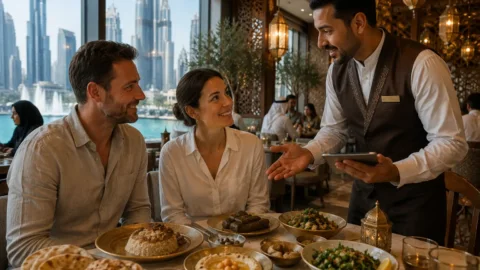
Beirut café culture is a good place to slow down and participate rather than simply order and leave. Ask what the server recommends. Try a local breakfast. Drink your coffee without rushing if the setting invites it.
You do not need to remember every phrase. Start with بدي قهوة، لو سمحت, meaning “I’d like a coffee, please.” Say it: Baddi ahwe, law samaht. Add شو بتنصحني؟, meaning “What do you recommend?” Say it: Shu btensahne.
Then smile, enjoy your breakfast, and let the conversation go where it goes.
Travel information can change. Recheck important prices, schedules, entry rules, health requirements and local regulations with the relevant official source before relying on them.