Cairo Shopping Arabic: How to Ask “How Much?” Like a Local
Shopping in Cairo gets easier when you can ask the price, react naturally, and politely decide whether you want to buy. You might use Egyptian Arabic in a neighborhood shop,...



Cairo Shopping Arabic is the focus of this EasyArabicNow guide, with practical travel context and useful planning tips for your trip.
Shopping in Cairo gets easier when you can ask the price, react naturally, and politely decide whether you want to buy.
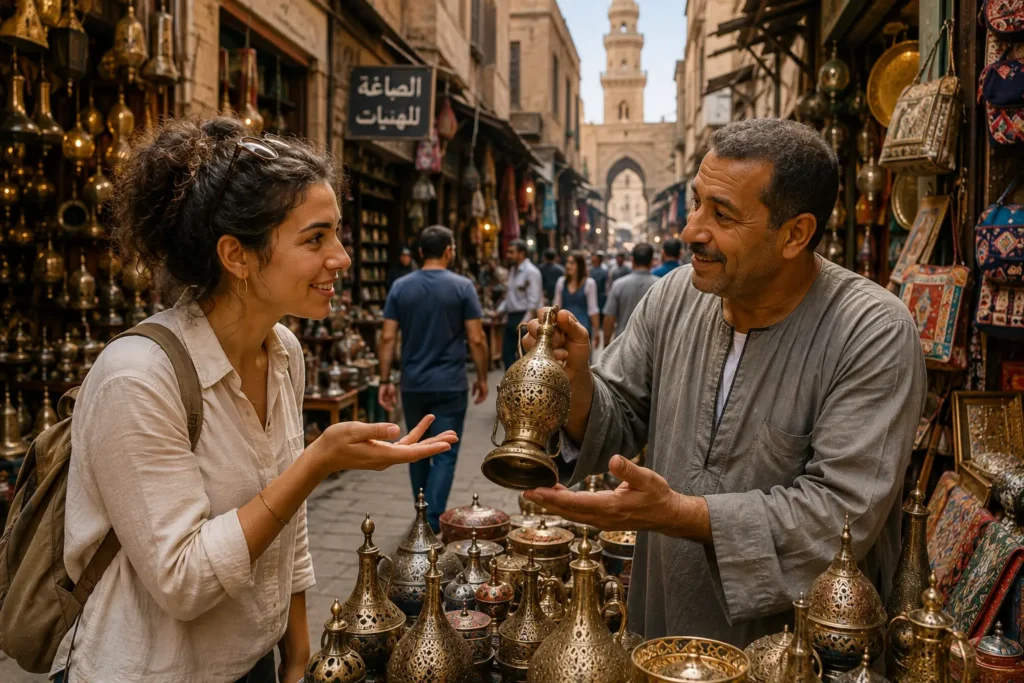
You might use Egyptian Arabic in a neighborhood shop, a market, a souvenir stall, or while buying snacks and small everyday items. You do not need to negotiate every purchase. Sometimes you just want to understand the price and move on.
The most useful phrase to remember is simple: بكام ده؟, meaning “How much is this?” Say it: Bekam da.
Useful Cairo Shopping Phrases
| Arabic | English | Say it |
|---|---|---|
| بكام ده؟ | How much is this? | Bekam da |
| بكام دي؟ | How much is this? | Bekam di |
| غالي أوي | That’s very expensive | Ghali awi |
| ممكن أقل شوية؟ | Can you make it a little cheaper? | Momken aqall shwayya |
| آخر سعر كام؟ | What’s the final price? | Akher sear kam |
| أنا بتفرج بس | I’m just looking | Ana batfarag bass |
| مش عايزه، شكراً | I don’t want it, thank you | Mish ayzo shokran |
| عندك حاجة أرخص؟ | Do you have something cheaper? | Andak haga arkhas |
| هاخد ده | I’ll take this | Hakhod da |
| شكراً | Thank you | Shokran |
Ask “How Much?” the Easy Way
For a masculine item, point and ask بكام ده؟, meaning “How much is this?” Say it: Bekam da.
For a feminine item, you may hear بكام دي؟, which also means “How much is this?” Say it: Bekam di.
As a traveler, do not worry about figuring out which version is perfect every time. Pointing at the item makes your meaning clear, and بكام ده؟, meaning “How much is this?” Say it: Bekam da., will get the conversation started.
When the Price Feels High
If the price surprises you, smile and say غالي أوي, meaning “That’s very expensive.” Say it: Ghali awi.
Keep your tone light. You are opening a conversation, not starting an argument.
If bargaining seems appropriate, ask ممكن أقل شوية؟, meaning “Can you make it a little cheaper?” Say it: Momken aqall shwayya.
Not every shop has flexible prices, so follow the situation. In a market or souvenir shop, there may be room to discuss the price. In a store with clearly marked fixed prices, there may not be.
Ask for the Final Price
If you are genuinely interested, try آخر سعر كام؟, meaning “What’s the final price?” Say it: Akher sear kam.
This is useful when you have already discussed the price and want to know where the seller really stands.
If you like the item but want a cheaper option, ask عندك حاجة أرخص؟, meaning “Do you have something cheaper?” Say it: Andak haga arkhas.
The seller may show you a different size, material, or version.
When You Are Just Looking
You do not have to start negotiating every time someone shows you something.
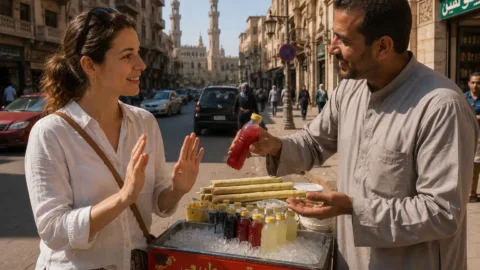
Say أنا بتفرج بس, meaning “I’m just looking.” Say it: Ana batfarag bass.
This is especially handy when you want time to browse without committing.
If you decide you do not want the item, say مش عايزه، شكراً, meaning “I don’t want it, thank you.” Say it: Mish ayzo shokran.
A friendly tone is enough. You do not need to explain why you are leaving.
When You Are Ready to Buy
Once you are happy with the price, point to the item and say هاخد ده, meaning “I’ll take this.” Say it: Hakhod da.
Then finish with شكراً, meaning “Thank you.” Say it: Shokran.
If you are buying several things, make sure you understand the total before paying. Showing numbers on your phone can also help if spoken prices are difficult to catch.
Keep It Friendly
Shopping in Cairo can be one of the easiest places to practice Egyptian Arabic because the situation gives you plenty of context.
Point, smile, and start with بكام ده؟, meaning “How much is this?” Say it: Bekam da. If the price feels high, try ممكن أقل شوية؟, meaning “Can you make it a little cheaper?” Say it: Momken aqall shwayya. If you are only browsing, use أنا بتفرج بس, meaning “I’m just looking.” Say it: Ana batfarag bass.
You do not need perfect Arabic. A few natural phrases are enough to make the exchange smoother and more enjoyable.
Travel information can change. Recheck important prices, schedules, entry rules, health requirements and local regulations with the relevant official source before relying on them.