Iraqi Food Arabic: 10 Phrases to Use at the Table
Sitting down to eat in Iraq, or with an Iraqi family, is a great moment to use a little spoken Arabic. Meals are often social, generous, and full of encouragement...




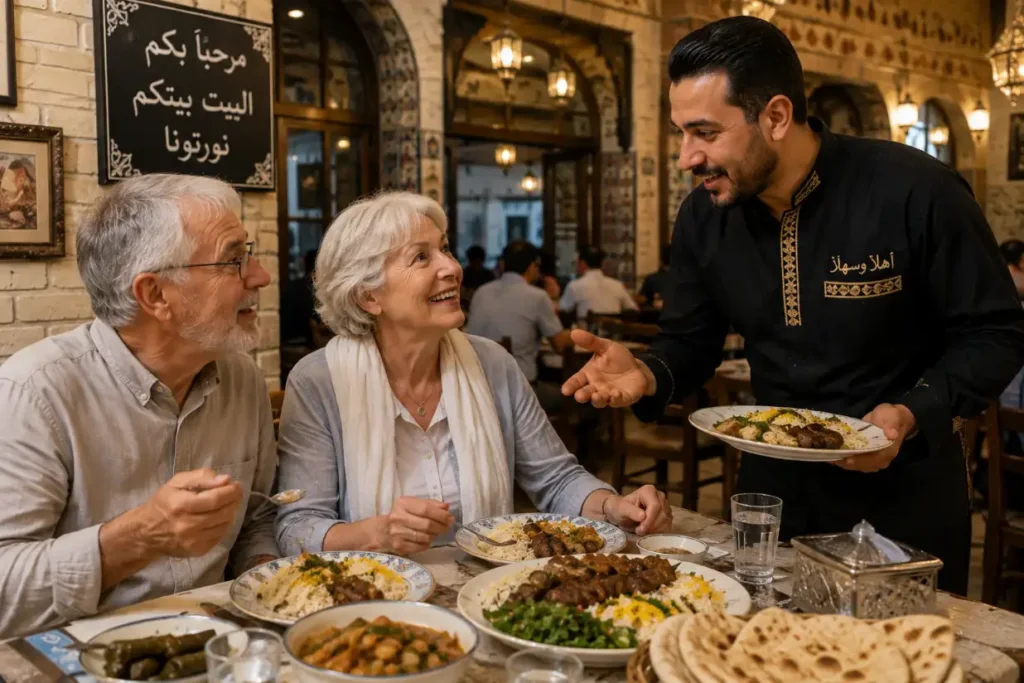
Iraqi Food Arabic is the focus of this EasyArabicNow guide, with practical travel context and useful planning tips for your trip.
Sitting down to eat in Iraq, or with an Iraqi family, is a great moment to use a little spoken Arabic. Meals are often social, generous, and full of encouragement to eat more.
You do not need long sentences. A few natural Iraqi Arabic phrases can help you ask for food, compliment the meal, request water, and respond warmly when someone offers you another serving.
10 Useful Iraqi Arabic Phrases
| Arabic | English | Say it |
|---|---|---|
| تفضل | Please, go ahead / Help yourself | Tfaddal |
| أريد هذا، لو سمحت | I want this, please | Areed hatha, law samaht |
| شنو هذا؟ | What is this? | Shinu hatha |
| أريد شوية | I want a little | Areed shwayya |
| بعد شوية، لو سمحت | A little more, please | Baad shwayya, law samaht |
| مي، لو سمحت | Water, please | May, law samaht |
| كلش طيب | Very delicious | Killish tayyib |
| عاشت إيدك | Thank you for the food / Bless your hands | Aashet eedak |
| شبعت، الحمد لله | I’m full, thank God | Shabaat, alhamdulillah |
| الحساب، لو سمحت | The bill, please | Il hisab, law samaht |
When Food Starts Arriving
At a shared meal, you may hear تفضل, meaning “Please, go ahead” or “Help yourself.” Say it: Tfaddal.
It is a welcoming phrase, and you may hear it more than once as people encourage you to eat.
If you see a dish you want to try, say أريد هذا، لو سمحت, meaning “I want this, please.” Say it: Areed hatha, law samaht.
Pointing is completely fine. It keeps the conversation easy, especially when there are several dishes on the table.
Ask What You Are Eating
If you do not recognize a dish, ask شنو هذا؟, meaning “What is this?” Say it: Shinu hatha?
This is one of the most useful food phrases in Iraqi Arabic. It can turn lunch into a conversation, and your host or server may happily explain what is in the dish.
If you only want a small amount, say أريد شوية, meaning “I want a little.” Say it: Areed shwayya.
Want another serving? Say بعد شوية، لو سمحت, meaning “A little more, please.” Say it: Baad shwayya, law samaht.
Compliment the Food
If you enjoy the meal, say كلش طيب, meaning “Very delicious.” Say it: Killish tayyib.
This is simple, natural, and easy to remember.
Another warm phrase is عاشت إيدك, meaning “Thank you for the food” or literally a compliment to the hands that prepared it. Say it: Aashet eedak.
It is especially nice when someone has cooked for you. You do not need to explain the phrase or make a big performance of it. Say it with a smile and enjoy the reaction.
Water and Another Helping
To ask for water, say مي، لو سمحت, meaning “Water, please.” Say it: May, law samaht.
At a family meal, you may be offered more food several times. This is often simply hospitality.
If you are full, say شبعت، الحمد لله, meaning “I’m full, thank God.” Say it: Shabaat, alhamdulillah.
Say it warmly, especially if someone is still encouraging you to take another serving. You can smile, place a hand lightly over your stomach, and repeat it if needed.
Follow Your Host’s Lead
In many Iraqi homes, meals are about sharing as much as eating. You may notice people serving one another, encouraging guests to take more, or eating from shared dishes.
Follow your host’s lead. Wash your hands before eating, use your right hand when eating food directly by hand, and do not worry about getting every detail perfect.
If more food keeps appearing, treat it as part of the welcome. Try what interests you, compliment what you enjoy, and politely say when you have had enough.
At a Restaurant
When you are ready to pay, say الحساب، لو سمحت, meaning “The bill, please.” Say it: Il hisab, law samaht.
You do not need all ten phrases at once. Remember شنو هذا؟, meaning “What is this?” Say it: Shinu hatha?, and كلش طيب, meaning “Very delicious.” Say it: Killish tayyib.
Those two alone can make a meal more interactive, more memorable, and a little more Iraqi.
Travel information can change. Recheck important prices, schedules, entry rules, health requirements and local regulations with the relevant official source before relying on them.