Jemaa el-Fnaa Darija: 10 Phrases to Handle Vendors With Confidence
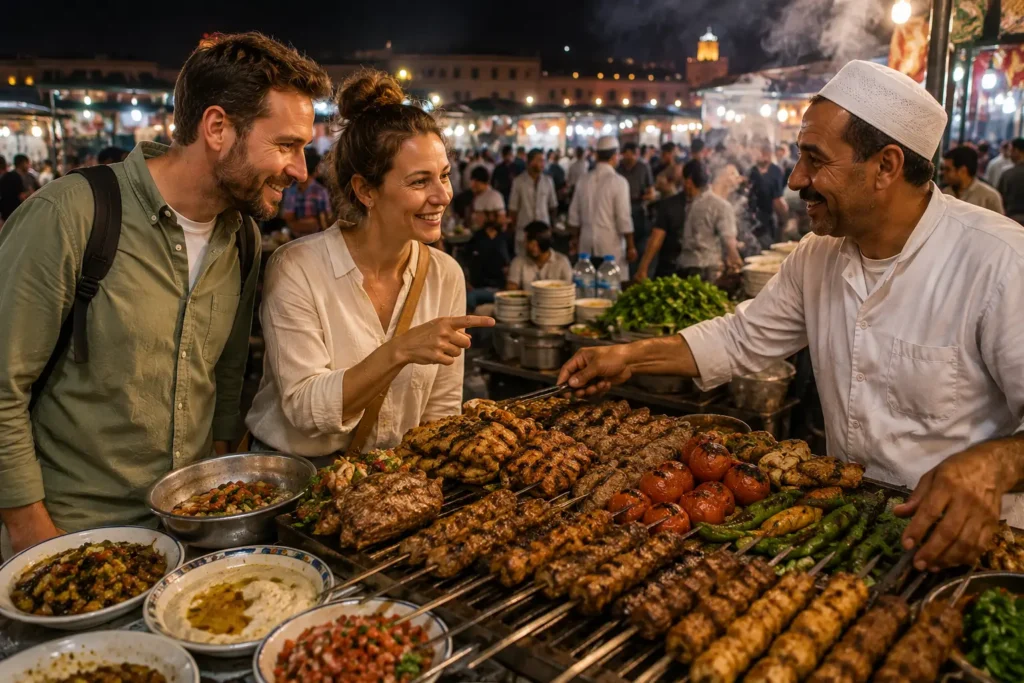
Jemaa el-Fnaa is lively, crowded, and full of people offering food, souvenirs, juice, photos, and other experiences. You do not need to avoid the interaction. A few clear Moroccan Darija...



Jemaa el-Fnaa Darija is the focus of this EasyArabicNow guide, with practical travel context and useful planning tips for your trip.
Jemaa el-Fnaa is lively, crowded, and full of people offering food, souvenirs, juice, photos, and other experiences.
You do not need to avoid the interaction. A few clear Moroccan Darija phrases can help you ask the price, say you are only looking, decline politely, and agree when you actually want something.
Keep your tone friendly, speak clearly, and do not feel pressured to continue a conversation after you have said no.
10 Useful Darija Phrases for Jemaa el-Fnaa
| Arabic | English | Say it |
|---|---|---|
| سلام | Hello | Salam |
| بشحال هادا؟ | How much is this? | Bshhal hada |
| غير كنتفرج | I’m just looking | Ghir kantfarraj |
| لا، شكرا | No, thank you | La shokran |
| ما بغيتش | I don’t want it | Ma bghitsh |
| غالي بزاف | That’s very expensive | Ghali bzzaf |
| نقص شوية، عافاك | Lower the price a little, please | Nqass shwiya aafak |
| شحال آخر ثمن؟ | What’s your final price? | Shhal akher taman |
| صافي، شكرا | That’s enough / Okay, thank you | Safi shokran |
| ناخد هادا | I’ll take this | Nakhod hada |
Start Friendly
A simple سلام, meaning “Hello.” Say it: Salam.
Use it when approaching a stall or responding to someone who greets you. Starting politely does not mean you have agreed to buy anything.
If an item interests you, point and ask بشحال هادا؟, meaning “How much is this?” Say it: Bshhal hada.
Listen to the price before deciding what to do next.
When You Are Just Looking
Jemaa el-Fnaa is a place where you will see plenty of things without wanting to buy all of them.
Say غير كنتفرج, meaning “I’m just looking.” Say it: Ghir kantfarraj.
It is friendly and clear.
If you already know you are not interested, use لا، شكرا, meaning “No, thank you.” Say it: La shokran.
You can smile, keep walking, and repeat it if necessary. You do not need to invent an excuse.
For an even clearer refusal, say ما بغيتش, meaning “I don’t want it.” Say it: Ma bghitsh.
When the Price Feels Too High
If you are genuinely interested but the price sounds high, say غالي بزاف, meaning “That’s very expensive.” Say it: Ghali bzzaf.
Keep it light. Bargaining works better as a conversation than as an argument.
You can follow with نقص شوية، عافاك, meaning “Lower the price a little, please.” Say it: Nqass shwiya aafak.
If you are getting close to a price you would actually pay, ask شحال آخر ثمن؟, meaning “What’s your final price?” Say it: Shhal akher taman.
Only negotiate seriously for something you may actually buy. That keeps the exchange more enjoyable for everyone.
When You Want the Conversation to End
One very useful Moroccan word is صافي, which can mean something like “That’s enough,” “Okay,” or “Finished,” depending on the situation. Say it: Safi.
At Jemaa el-Fnaa, صافي، شكرا, meaning “That’s enough, thank you” or “Okay, thank you.” Say it: Safi shokran., can help close an interaction naturally.
Say it calmly and keep moving.
You do not need to sound angry to be clear.
When You Decide to Buy
If you like the item and agree on the price, say ناخد هادا, meaning “I’ll take this.” Say it: Nakhod hada.
Before paying, make sure you understand the total, especially if several items or services are involved.
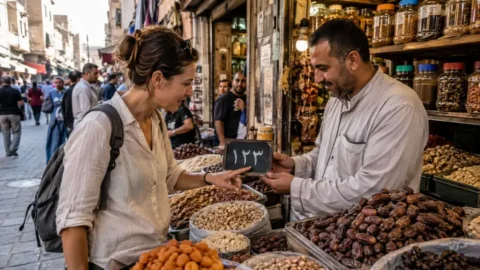
If spoken numbers are difficult to follow, asking the vendor to show the amount on a phone or calculator can make things much easier.
Enjoy the Square Without Feeling Rushed
Jemaa el-Fnaa is at its best when you participate instead of trying to shut out every interaction.
Ask about food. Watch what people are ordering. Try fresh juice. Browse the stalls. Talk to vendors when you want to.
When you are not interested, remember لا، شكرا, meaning “No, thank you.” Say it: La shokran. When you want the price, use بشحال هادا؟, meaning “How much is this?” Say it: Bshhal hada. And when you are ready to end the exchange, say صافي، شكرا, meaning “That’s enough, thank you.” Say it: Safi shokran.
Those three phrases can carry you through a surprisingly large part of an evening in the square.
Travel information can change. Recheck important prices, schedules, entry rules, health requirements and local regulations with the relevant official source before relying on them.