

Morocco, from imperial medinas to Atlantic light and Sahara horizons.
A compact travel encyclopedia for understanding the country before you land: where Morocco sits, who lives there, what Darija sounds like, how hospitality works, which cities matter, how money works and what kind of trip each region creates.
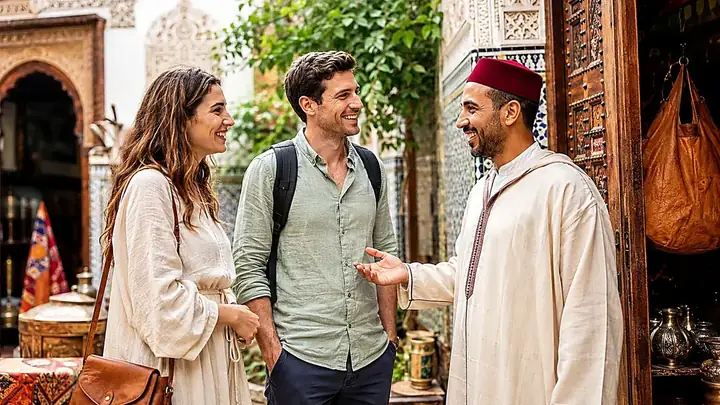
Know the place before you plan the route.
Capital, language, currency, time zone and the essentials that help the destination make sense at a glance.
A destination makes more sense when you understand what shaped it.
Where it is
Morocco occupies the north-west corner of Africa, facing both the Atlantic Ocean and the Mediterranean. Europe is visible across the Strait of Gibraltar, while the Atlas Mountains and Sahara-facing south create a completely different geography within the same trip.
People & heritage
Moroccan identity is layered rather than one-dimensional. Arab and Amazigh cultures are deeply interwoven, with Saharan, Andalusian, African, Mediterranean and historic Jewish influences visible in music, food, architecture, crafts and city life.
Hospitality
Hospitality is one of the easiest parts of Morocco to feel as a visitor. Tea, greetings and conversation matter. A little Darija often changes the tone of an interaction because it signals attention rather than fluency.
Flag & symbols
The Moroccan flag carries one of the clearest visual identities in the Arab world: a red field and a green five-pointed star. Alongside the flag, travelers quickly connect Morocco with royal cities, zellige, carved plaster, cedar, kasbahs and medinas.
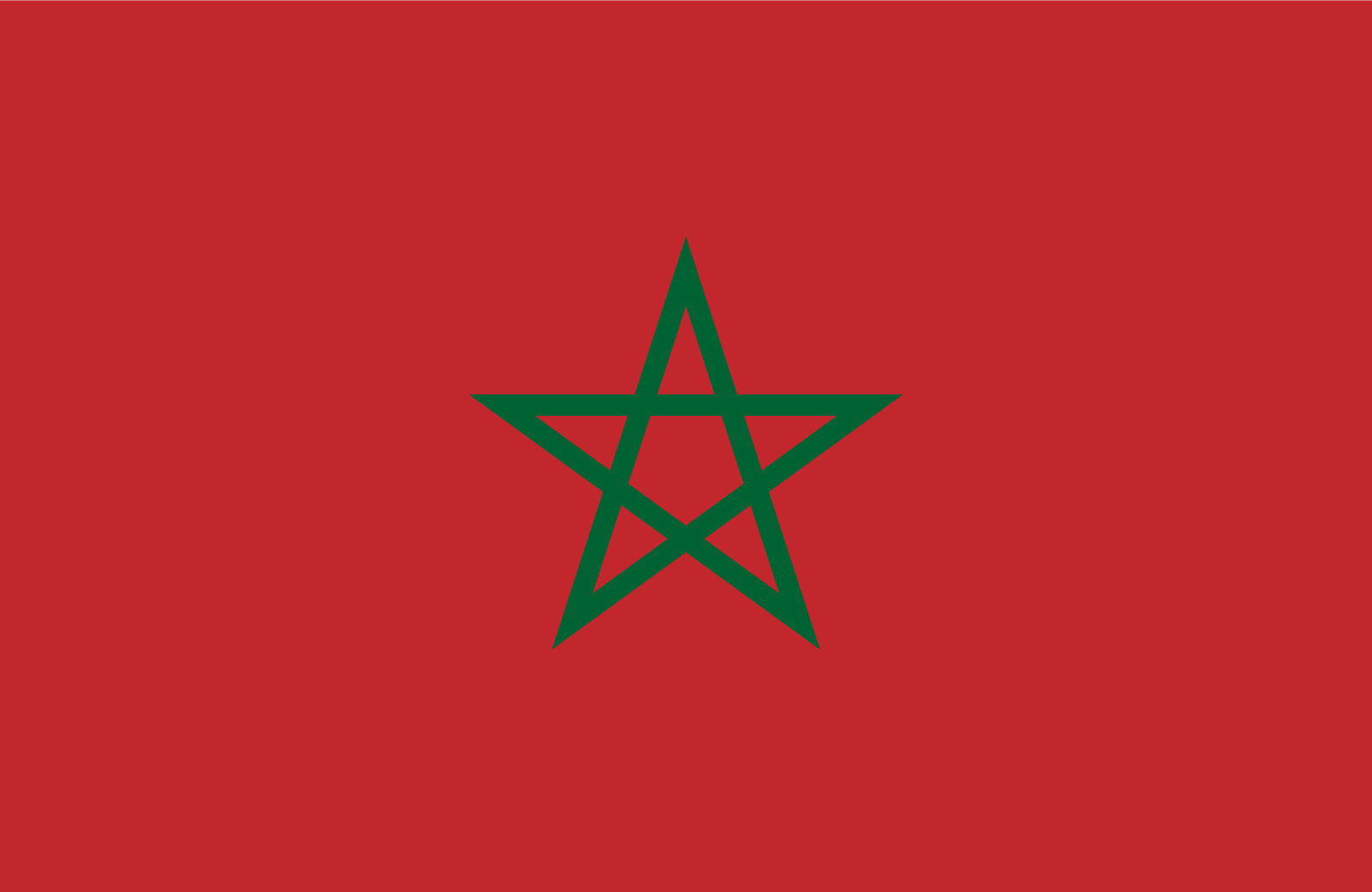
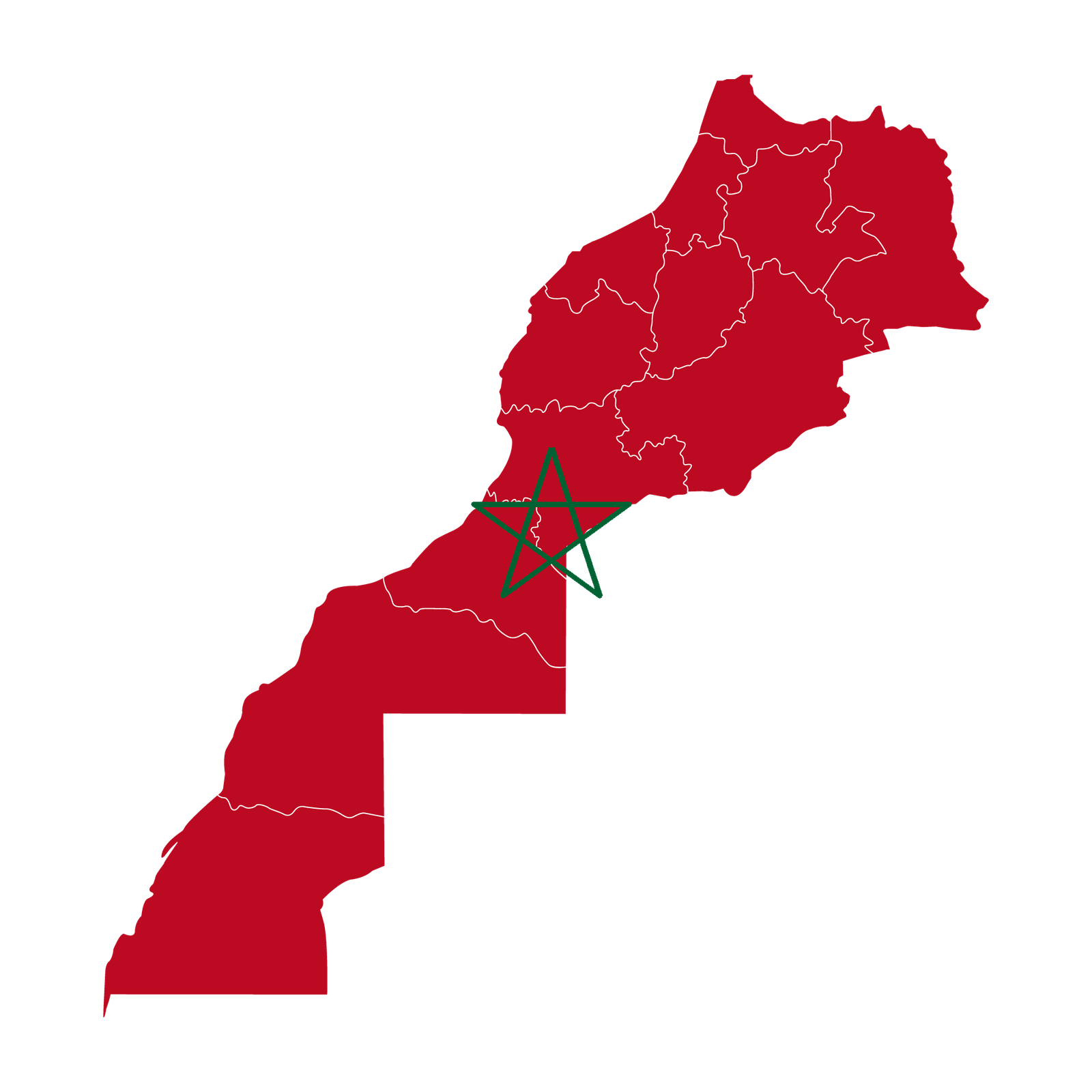
The red field is associated with courage, sacrifice and the defense of the homeland.
The green five-pointed star is associated with peace, spiritual continuity and the unity that ties the kingdom together.
Open the country one layer at a time.
Geography, cities, language, food, transport and the landscapes that define a first trip.
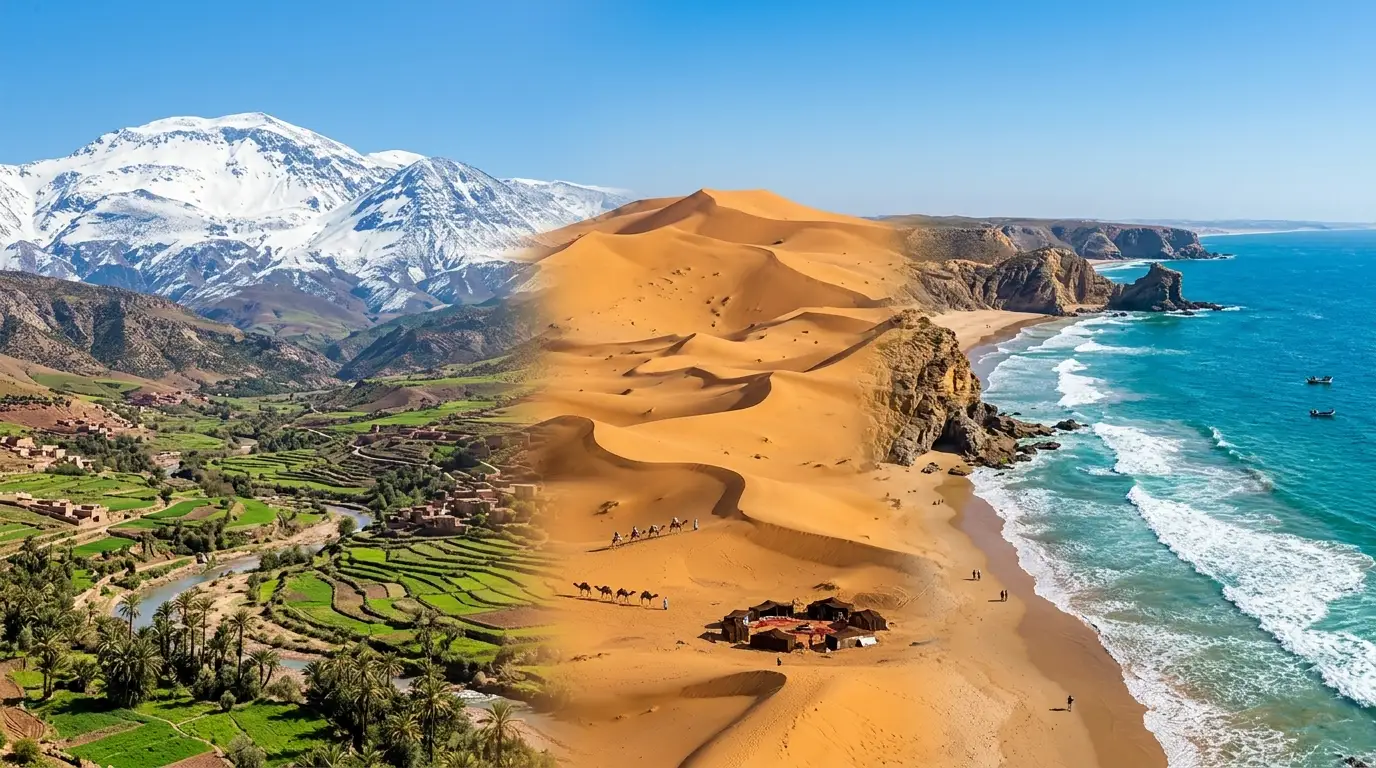
Sea, mountains, desert and green plains
Morocco can feel like several countries stitched together: Rif and Atlas mountains, fertile northern plains, long Atlantic coastline, Mediterranean towns and the pre-Sahara valleys around Ouarzazate, Zagora and Merzouga.
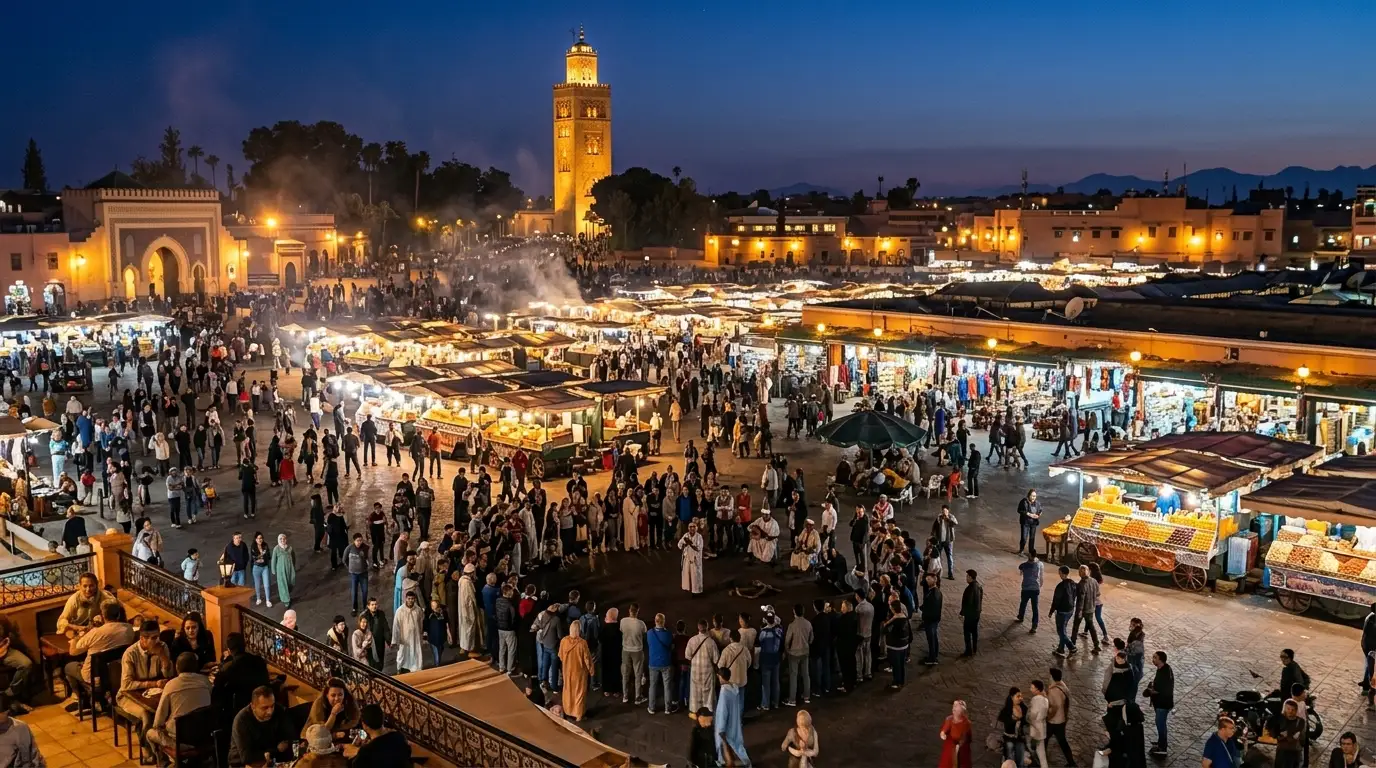
Imperial cities and very different urban moods
Marrakech is theatrical and energetic; Fez is intensely historic; Rabat is calmer and administrative; Casablanca is modern and commercial; Tangier faces Europe; Essaouira slows the pace; Chefchaouen layers mountain light over a compact old town.
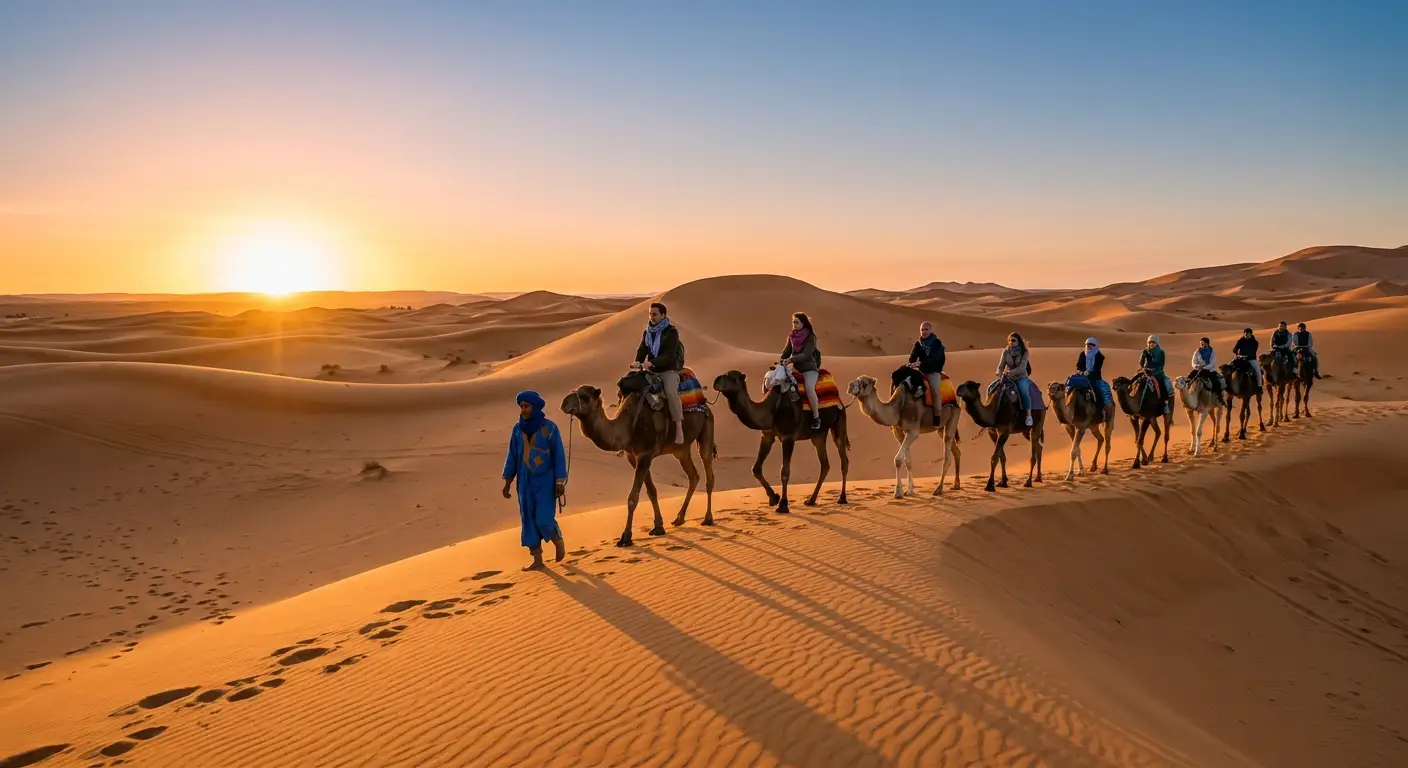
Atlas roads, oases and Sahara edges
The High Atlas gives the country a dramatic spine. South of the mountains, adobe villages, kasbahs, palm valleys and dune landscapes become the defining scenery. Merzouga and the Erg Chebbi dunes are the best-known Sahara gateway for first-time visitors.
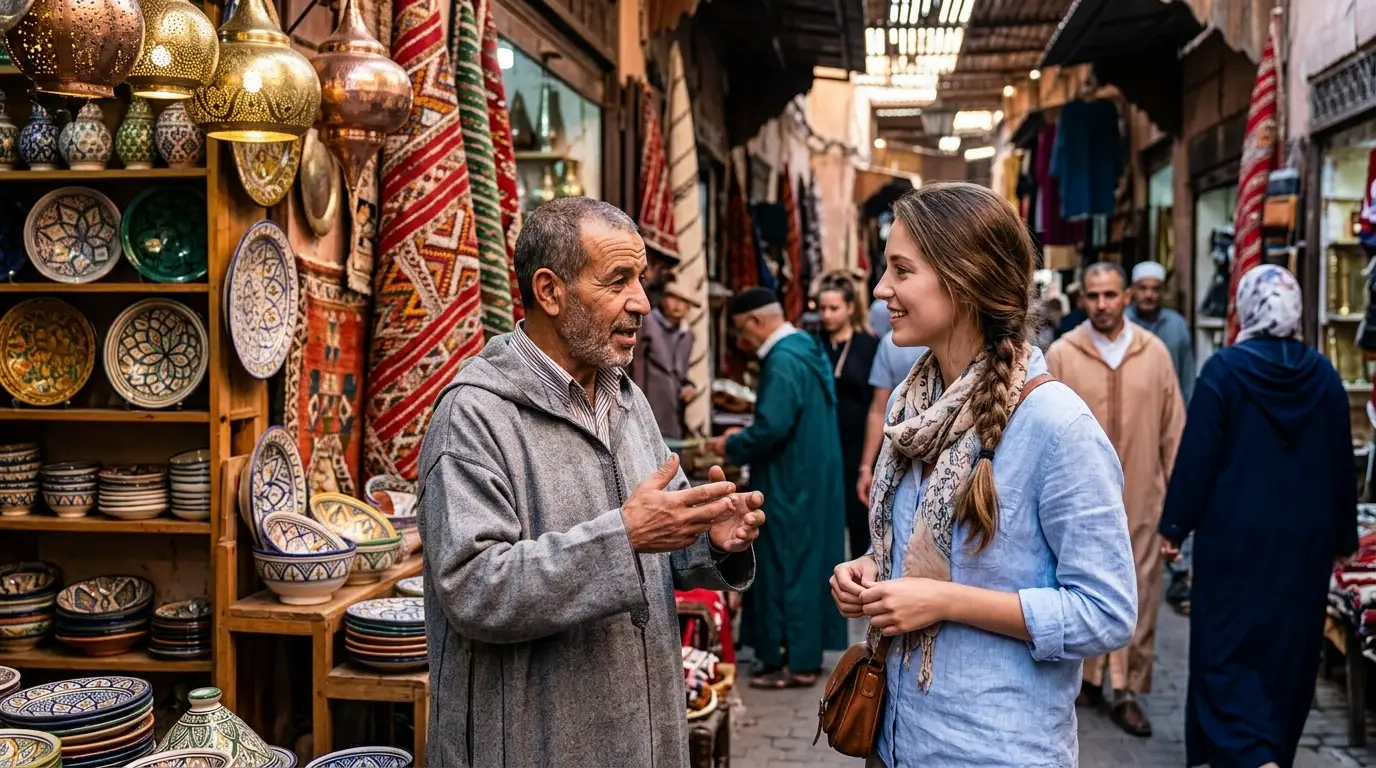
Darija sounds different because it is different
Standard Arabic appears in formal contexts, but everyday Moroccan Arabic is Darija. Amazigh languages are also part of national life. French remains common in business and tourism, while English is increasingly useful in major visitor areas.
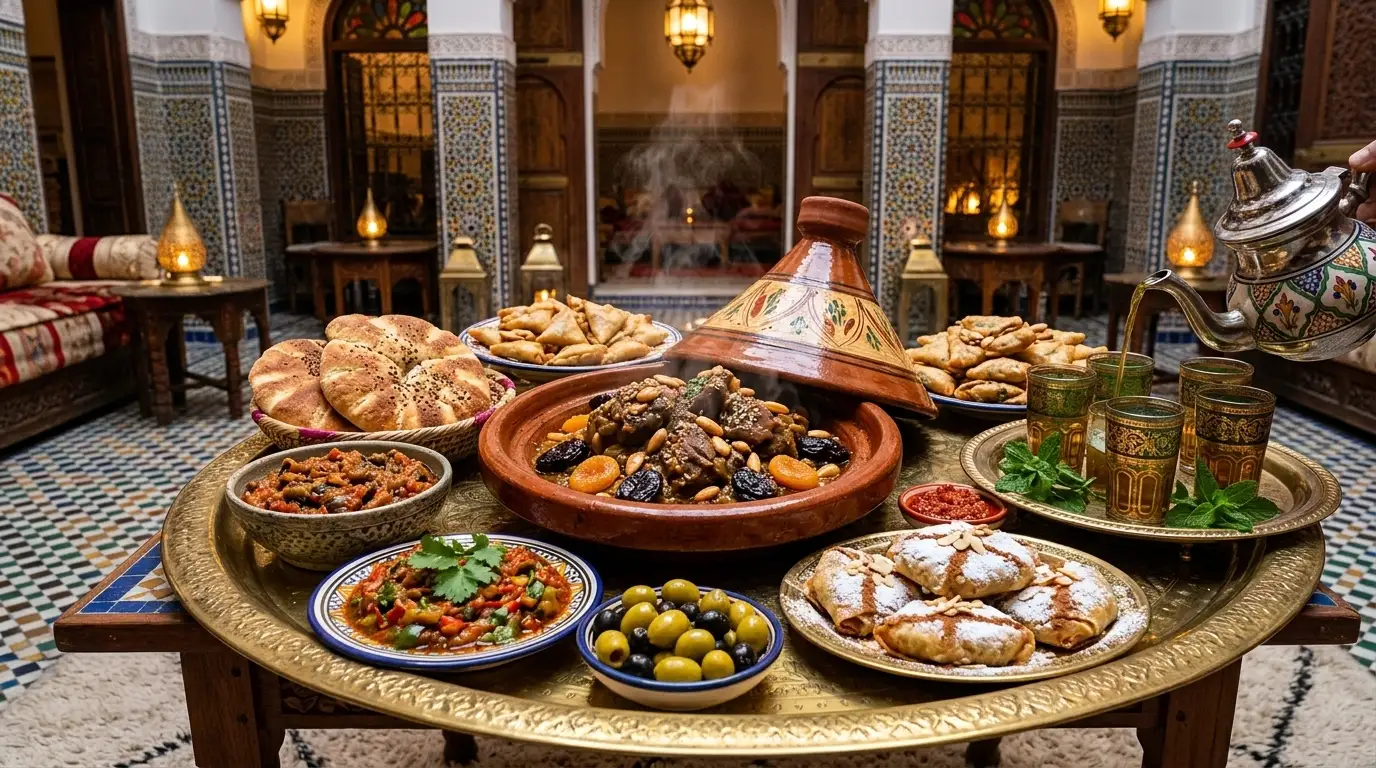
Meals are one of the fastest ways into the culture
Tagine, couscous, harira, grilled meats, seafood, breads and regional sweets vary widely. The important travel habit is to ask what is ready today rather than assuming every dish is available at every hour.
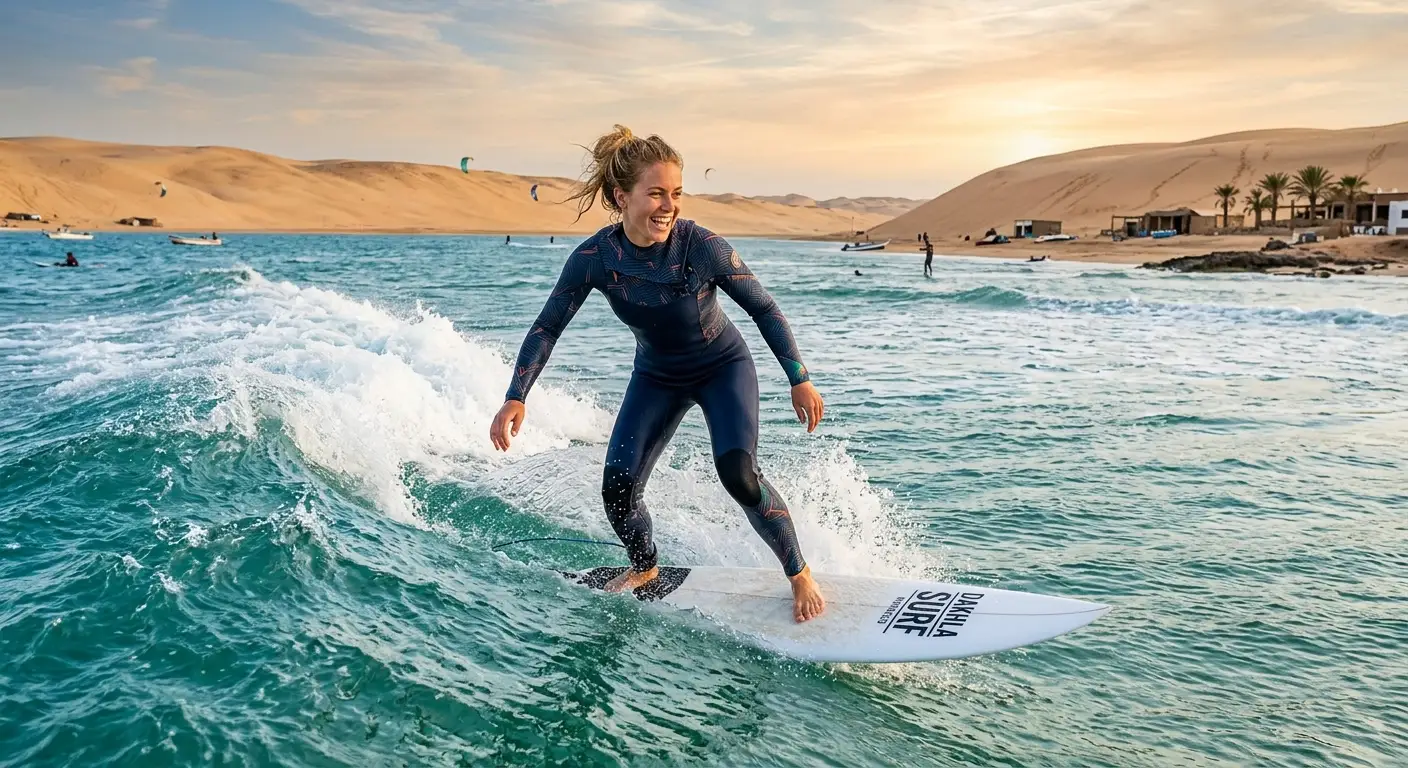
Dakhla: Atlantic wind, lagoon and board-sport country
For American travelers who want to go beyond the classic Marrakech-Fez route, Dakhla is one of Morocco’s most distinctive additions. The Atlantic lagoon, PK25, Foum El Bouir and Dragon Point make the area especially attractive for surfing, kitesurfing and windsurfing, while desert scenery and seafood give the stay a completely different rhythm from Morocco’s imperial cities.
Train the main corridor; drive when the road is the experience
Fast and conventional trains connect several major northern and central cities. Buses and shared transport reach farther. A rental car becomes most valuable for mountain, coast and desert-edge routes where the journey itself is part of the trip.
What the currency feels like in your head.
The Moroccan dirham (MAD) is the national currency. The values below are approximate reference conversions and can move with the market.
Typical journey times from major English-speaking markets.
Times are approximate airborne/itinerary ranges. Season, airline, routing, wind and connection length can change the total substantially.
Places worth knowing before you build the itinerary.
You do not need a language course before this trip.
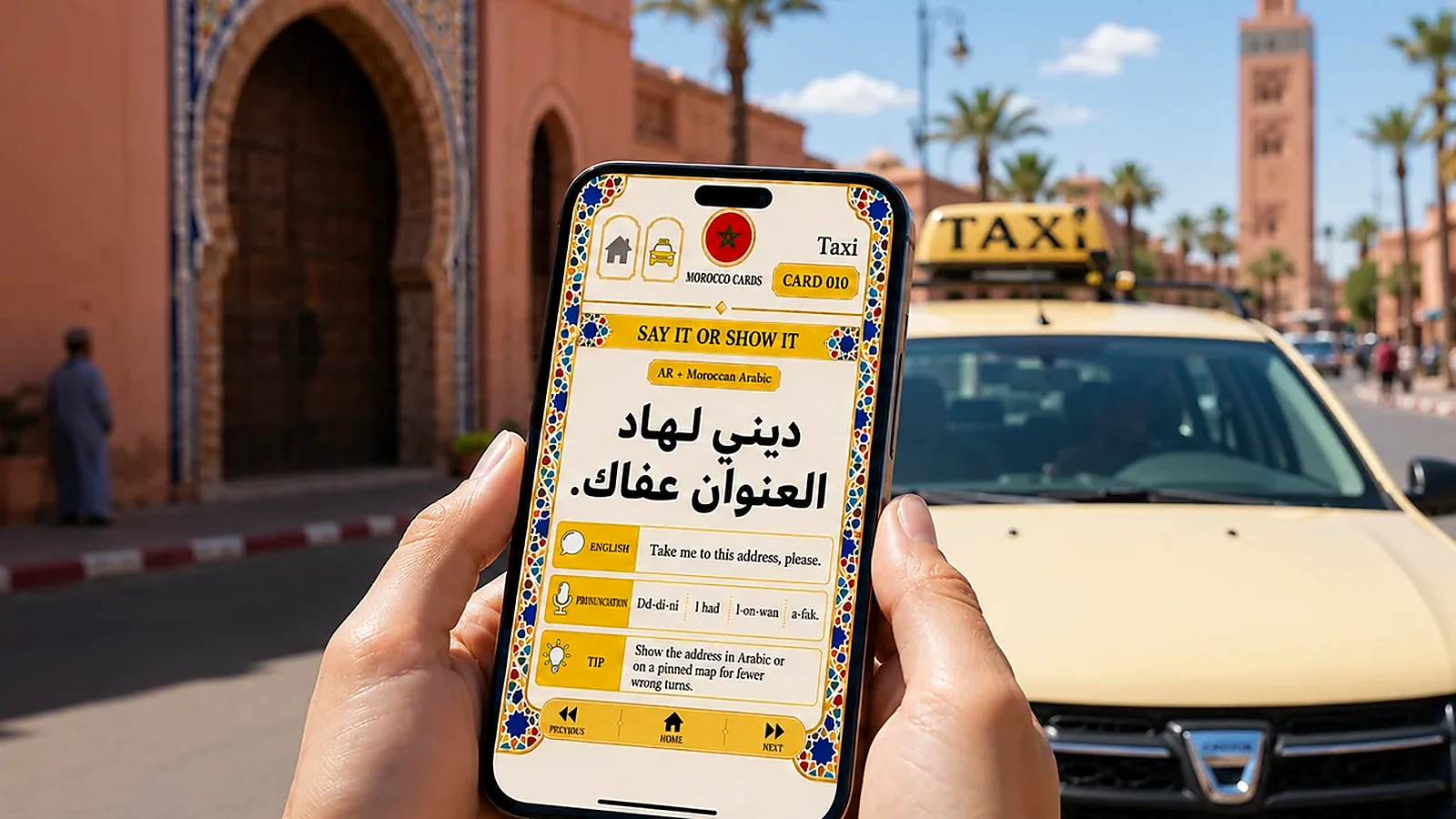
Save the phrases that solve real moments: taxis, hotels, restaurants, shopping, directions, emergencies and greetings. Say the phrase or show the Arabic card when clarity matters more than fluency.
The words make more sense with the food and culture around them.
Taste Morocco
See what locals eat, what dishes cost and the dining habits worth knowing before you order.
Continue on ArabicFoodGuide 02 · CULTUREUnderstand the culture behind the words
Go beyond the phrase and understand Moroccan hospitality, greetings and everyday customs.
Continue on DailyWorldCultureThese are independent companion guides. Open them when they match the next question in your trip.