What’s Your Name in Arabic? “My Name Is…” and “Nice to Meet You”
You have just met a shopkeeper, driver, guide or hotel receptionist. They smile, ask your name, and suddenly this is no longer just a transaction. It is a conversation. Knowing...




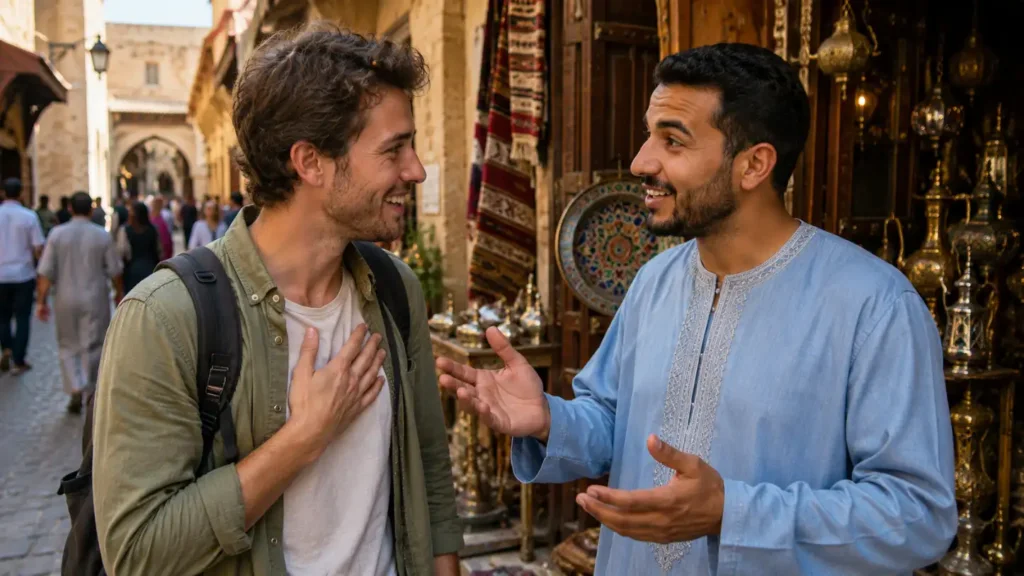
Name in Arabic My Name is the focus of this EasyArabicNow guide, with practical travel context and useful planning tips for your trip.
You have just met a shopkeeper, driver, guide or hotel receptionist. They smile, ask your name, and suddenly this is no longer just a transaction. It is a conversation.
Knowing how to say “My name is…” and “Nice to meet you” in Arabic is one of the easiest ways to make travel feel more personal.
There is no single spoken Arabic used everywhere. The exact wording changes from Morocco to Egypt, the Levant and the Gulf. Still, a few simple expressions are widely understood, and locals will usually appreciate the effort even if your pronunciation is not perfect.
Useful Arabic Introductions
| Arabic | English | Say it |
|---|---|---|
| ما اسمك؟ | What’s your name? | Ma ismak? |
| اسمي… | My name is… | Ismi… |
| أنا… | I’m… | Ana… |
| تشرفنا | Nice to meet you | Tasharrafna |
| وأنا كمان | Me too / Nice to meet you too | Wa ana kaman |
| من وين إنت؟ | Where are you from? | Min wayn inta? |
| أنا من… | I’m from… | Ana min… |
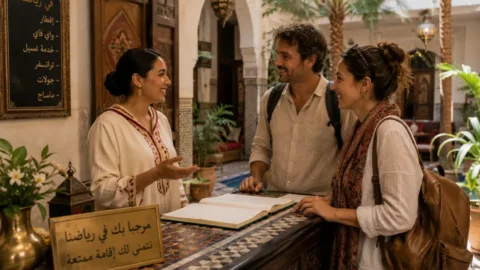
| أهلاً وسهلاً | Welcome / Nice to have you here | Ahlan wa sahlan |
The first question, ما اسمك؟, means “What’s your name?” Say it: Ma ismak? It is a clear, widely understood way to ask someone’s name.
To answer, say اسمي…, meaning “My name is…” Say it: Ismi… Then add your name.
For example, if your name is Sarah, simply say اسمي سارة, meaning “My name is Sarah.” Say it: Ismi Sarah.
The Easiest Way to Introduce Yourself
You do not need a long introduction.
Say اسمي…, meaning “My name is…” Say it: Ismi…
You can also use أنا…, meaning “I’m…” Say it: Ana…
So if your name is Daniel, you can say أنا دانيال, meaning “I’m Daniel.” Say it: Ana Daniel.
Then smile. In many situations, that is enough to turn a quick exchange into a friendly conversation.
How to Say “Nice to Meet You”
A useful expression is تشرفنا, meaning “Nice to meet you.” Say it: Tasharrafna.
You may hear different versions of this idea depending on the country. Do not worry about matching every local variation. If someone introduces themselves, تشرفنا, meaning “Nice to meet you,” pronounced Tasharrafna, will be understood in many places.
If someone says it to you first, you can smile and reply وأنا كمان, meaning “Me too.” Say it: Wa ana kaman.
That simple response works well when you want to keep the conversation relaxed.
Expect Different Ways of Asking Your Name
Spoken Arabic changes considerably across the Arab world.
In Egypt, you may hear locals ask your name differently from people in Jordan, Lebanon, Saudi Arabia or Morocco. The rhythm and pronunciation may change too.
That does not mean you learned the wrong phrase.
If you say ما اسمك؟, meaning “What’s your name?” Say it: Ma ismak?, people will generally understand what you want to know, even if they would normally phrase the question differently themselves.
When someone asks you a question and you suspect they are asking your name, listen for the word connected with “name,” then answer with اسمي…, meaning “My name is…” Say it: Ismi…
Your answer is often easier than understanding the question.
Keep the Conversation Going
Names often lead naturally to another question: where are you from?
You can ask من وين إنت؟, meaning “Where are you from?” Say it: Min wayn inta?
To answer, say أنا من…, meaning “I’m from…” Say it: Ana min…, followed by your country or city.
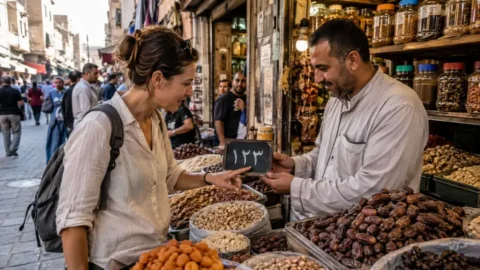
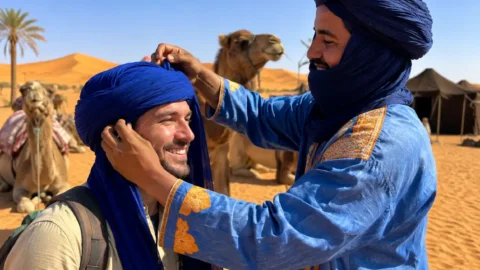
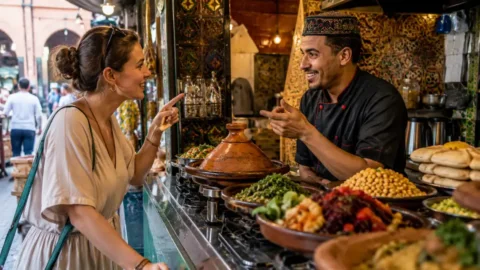
These tiny exchanges are useful in taxis, cafés, markets, guesthouses and desert camps. They are also a good way to move beyond pointing, paying and leaving.
Sometimes a local may tell you their name and immediately ask where you are from. Other times, the conversation may stop after the introductions. Both are completely normal.
Your Name May Sound Different in Arabic
Do not be surprised if someone pronounces your name slightly differently.
Arabic does not use exactly the same sounds as English, so names are sometimes adapted naturally. A local may also repeat your name to make sure they heard it correctly.
You can simply repeat it slowly.
There is no need to invent an Arabic version of your name unless you want to. Your own name is perfectly fine.
Enjoy the Small Interaction
Learning someone’s name is a small thing, but it can change the feeling of a travel moment.
Ask ما اسمك؟, meaning “What’s your name?” Say it: Ma ismak?
Answer with اسمي…, meaning “My name is…” Say it: Ismi…
Then add تشرفنا, meaning “Nice to meet you.” Say it: Tasharrafna.
Those three expressions are enough to start hundreds of friendly conversations. Say them, smile, and enjoy meeting the people behind the places you are visiting.
Travel information can change. Recheck important prices, schedules, entry rules, health requirements and local regulations with the relevant official source before relying on them.