Cairo Arabic: 10 Phrases You’ll Actually Use Every Day
Cairo gets easier the moment you start using a little Egyptian Arabic. You do not need long sentences. A greeting to the hotel receptionist, a polite request in a cafe,...




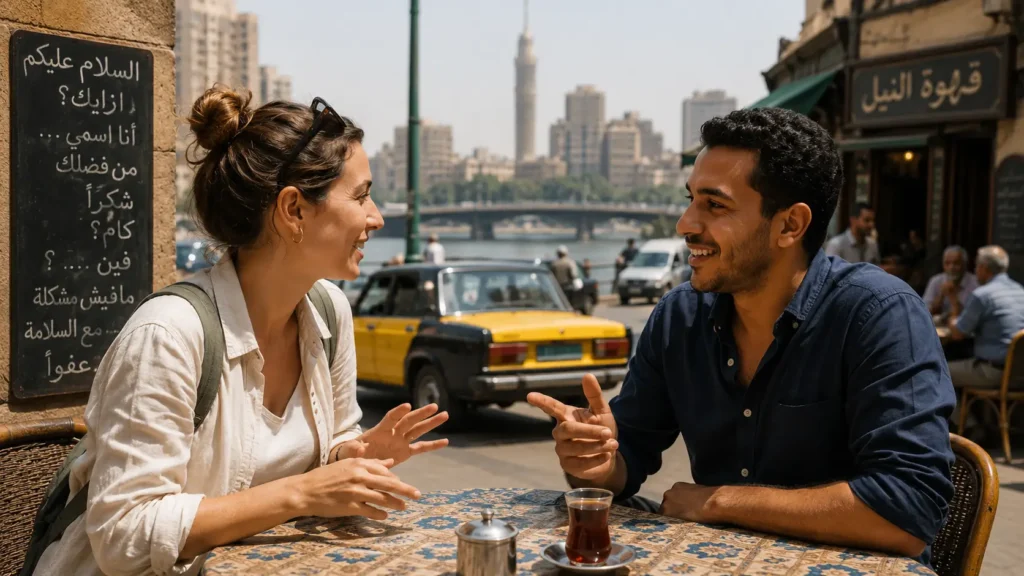
Cairo gets easier the moment you start using a little Egyptian Arabic.
You do not need long sentences. A greeting to the hotel receptionist, a polite request in a cafe, or a quick question to a taxi driver can turn an ordinary exchange into a warmer one.
These 10 Cairo Arabic phrases are simple, natural, and useful in situations travelers run into every day.
10 Useful Cairo Arabic Phrases
| Arabic | English | Say it |
|---|---|---|
| صباح الخير | Good morning | Sabah el kheir |
| إزيك؟ | How are you? | Izzayyak |
| لو سمحت | Please / Excuse me | Law samaht |
| شكراً | Thank you | Shokran |
| معلش | Sorry / Never mind / It’s okay | Maalesh |
| ممكن مية، لو سمحت؟ | Can I have water, please? | Momken mayya law samaht |
| فين الحمام؟ | Where is the bathroom? | Fein el hammam |
| بكام ده؟ | How much is this? | Bekam da |
| الحساب، لو سمحت | The bill, please | El hesab law samaht |
| ممكن تساعدني؟ | Can you help me? | Momken tesaaedni |
Start With a Greeting
In the morning, say صباح الخير, meaning “Good morning.” Say it: Sabah el kheir.
Use it with your hotel staff, a cafe worker, a shopkeeper, or someone you meet at breakfast. You will often hear a friendly response right back.
Another phrase you will hear constantly is إزيك؟, meaning “How are you?” Say it: Izzayyak.
Do not worry about turning the greeting into a long conversation. A smile and a short exchange are enough.
The Two Polite Words You Will Use Everywhere
If you remember only a few words, make لو سمحت, meaning “Please” or “Excuse me.” Say it: Law samaht.
Use it when getting someone’s attention, asking a question, ordering something, or speaking to a driver.
Then add شكراً, meaning “Thank you.” Say it: Shokran.
These two phrases work almost everywhere in Cairo, from a hotel lobby to a neighborhood bakery.
Learn the Cairo Favorite: Maalesh
One especially useful Egyptian word is معلش, meaning roughly “Sorry,” “Never mind,” or “It’s okay.” Say it: Maalesh.
You may hear it when someone bumps into you, when there is a small delay, or when something does not go exactly as planned.
It is one of those words whose meaning depends on the moment. As a traveler, you can use it lightly when a minor mistake happens. Smile, say it, and move on.
At Cafes and Restaurants
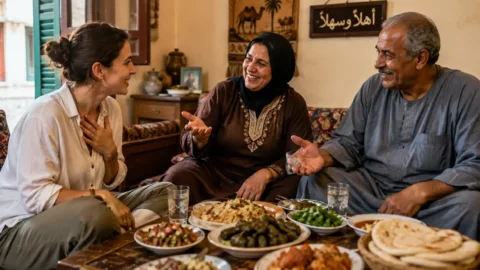
Cairo days can be long, so knowing how to ask for water is useful. Say ممكن مية، لو سمحت؟, meaning “Can I have water, please?” Say it: Momken mayya law samaht.
When you are ready to leave a restaurant or cafe, say الحساب، لو سمحت, meaning “The bill, please.” Say it: El hesab law samaht.
Try ordering something yourself rather than automatically switching to English. Even a short phrase can make the interaction more enjoyable.
Shopping and Getting Around
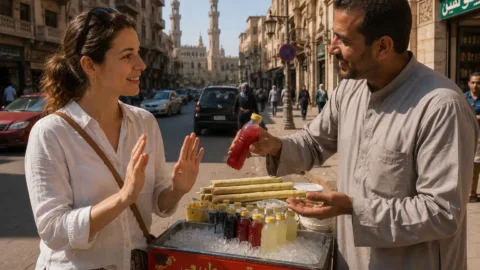
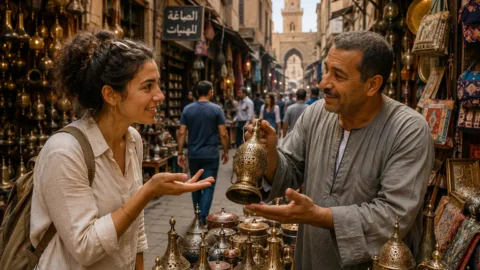
In a shop or market, point to an item and ask بكام ده؟, meaning “How much is this?” Say it: Bekam da.
Prices can vary depending on what you are buying and where you are shopping, so listen carefully to the answer and ask again if you need to.
For one of the most practical questions anywhere in the city, use فين الحمام؟, meaning “Where is the bathroom?” Say it: Fein el hammam.
Hotel staff, cafe workers, museum employees, and restaurant staff will understand immediately.
When You Need a Little Help
Cairo is full of moments when asking someone nearby is faster than staring at your phone.
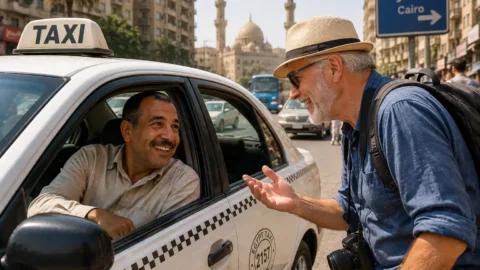
Say ممكن تساعدني؟, meaning “Can you help me?” Say it: Momken tesaaedni.
You can follow it by showing an address, pointing to a place on your map, or indicating what you need. You do not have to build a perfect Arabic sentence.
People may answer in Arabic, English, gestures, or a mixture of all three. That is part of the experience.
Before You Go
Start with three phrases: لو سمحت, meaning “Please” or “Excuse me.” Say it: Law samaht. Then شكراً, meaning “Thank you.” Say it: Shokran. Finally, remember معلش, meaning “Sorry,” “Never mind,” or “It’s okay.” Say it: Maalesh.
Use them often, smile when your pronunciation is not perfect, and enjoy the conversations that follow.
Travel information can change. Recheck important prices, schedules, entry rules, health requirements and local regulations with the relevant official source before relying on them.