Petra Arabic: 10 Jordanian Phrases Every First-Time Visitor Needs
Your first visit to Petra can involve a lot of small interactions: buying water, asking where the toilets are, checking a price, finding the entrance, or asking someone to slow...




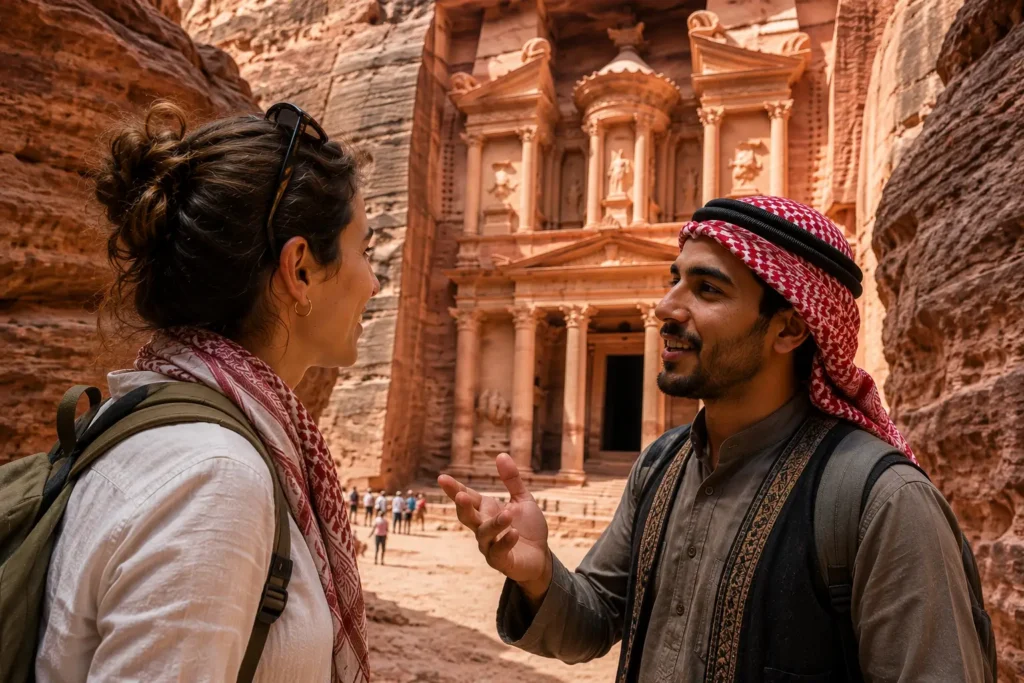
Your first visit to Petra can involve a lot of small interactions: buying water, asking where the toilets are, checking a price, finding the entrance, or asking someone to slow down and repeat something.
A little Jordanian Arabic makes those moments easier.
You do not need full sentences or perfect pronunciation. Save these 10 phrases, use them when you need them, and let gestures do the rest.
10 Useful Jordanian Arabic Phrases for Petra
| Arabic | English | Say it |
|---|---|---|
| مرحبا | Hello | Marhaba |
| كيفك؟ | How are you? | Keefak |
| لو سمحت | Please / Excuse me | Law samaht |
| شكراً | Thank you | Shukran |
| وين الحمام؟ | Where is the bathroom? | Wain el hammam |
| بدي مي، لو سمحت | I’d like water, please | Biddi may law samaht |
| قديش هاد؟ | How much is this? | Gaddeish had |
| وين المدخل؟ | Where is the entrance? | Wain el madkhal |
| شوي شوي، لو سمحت | Slowly, please | Shway shway law samaht |
| ممكن تساعدني؟ | Can you help me? | Mumkin tsaaedni |
Start With a Simple Hello
A friendly مرحبا, meaning “Hello.” Say it: Marhaba., works almost anywhere.
Use it when greeting hotel staff, a shopkeeper, a driver, or someone helping you around Petra.
You may also hear كيفك؟, meaning “How are you?” Say it: Keefak.
A smile and a short greeting are enough. You do not need to keep the conversation going in Arabic.
Keep Please and Thank You Ready
One phrase worth using constantly is لو سمحت, meaning “Please” or “Excuse me.” Say it: Law samaht.
Use it when asking for directions, getting someone’s attention, ordering water, or speaking with a driver.
When someone helps you, say شكراً, meaning “Thank you.” Say it: Shukran.
These two phrases are simple, polite, and useful throughout your visit.
Water and Rest Stops Matter
Petra involves plenty of walking, so knowing how to ask for water is especially handy.
Say بدي مي، لو سمحت, meaning “I’d like water, please.” Say it: Biddi may law samaht.
You can use it at a cafe, restaurant, hotel, or shop.
And when you need the bathroom, ask وين الحمام؟, meaning “Where is the bathroom?” Say it: Wain el hammam.
That is one phrase most travelers are glad they saved.
Finding Your Way
If you are trying to locate an entrance or doorway, ask وين المدخل؟, meaning “Where is the entrance?” Say it: Wain el madkhal.
You can point toward the building, ticket area, or location you mean while asking.
If you are unsure about something else, use ممكن تساعدني؟, meaning “Can you help me?” Say it: Mumkin tsaaedni.
Then show the person your map, ticket, hotel name, or destination on your phone. A short Arabic question plus a visual clue can be much easier than trying to explain everything.
Shopping and Small Purchases
When buying water, snacks, souvenirs, or other small items, ask قديش هاد؟, meaning “How much is this?” Say it: Gaddeish had.
Point to the item as you speak.
If you are shopping somewhere where prices are flexible, keep the exchange friendly and relaxed. If you are not interested, a smile and a polite thank-you are enough.
When Someone Speaks Too Fast
Arabic can sound very fast when you are hearing it in a real conversation for the first time.
Say شوي شوي، لو سمحت, meaning “Slowly, please.” Say it: Shway shway law samaht.
This is especially helpful when someone is giving you directions or explaining where to go.
Do not worry if you still do not understand every word. Ask again, point, or use your phone. Travel conversations often work through a mixture of words and gestures.
Enjoy the Interaction
Petra is unforgettable for its landscape and history, but small conversations can become part of the memory too.
Start with مرحبا, meaning “Hello.” Say it: Marhaba. Remember لو سمحت, meaning “Please” or “Excuse me.” Say it: Law samaht. Finish with شكراً, meaning “Thank you.” Say it: Shukran.
Those three phrases alone can make your first visit feel a little more personal.
Travel information can change. Recheck important prices, schedules, entry rules, health requirements and local regulations with the relevant official source before relying on them.