Dubai Taxi Arabic: What to Say From Pickup to Drop-Off
A taxi ride in Dubai is usually easy to manage in English, but a few Gulf Arabic phrases can still be useful from the moment your driver arrives until you...




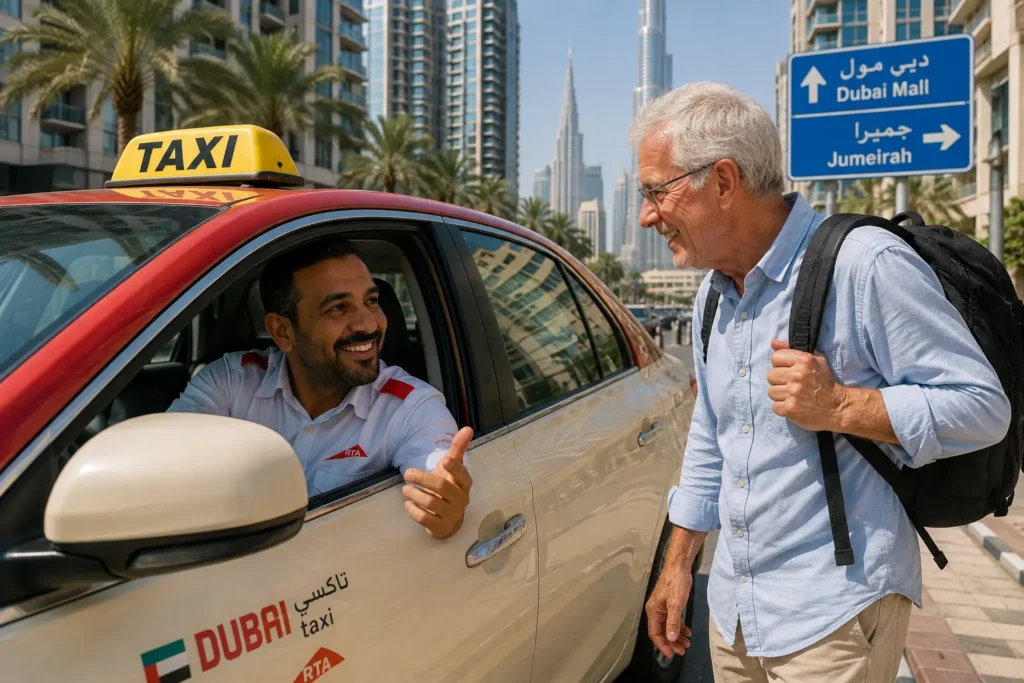
Dubai Taxi Arabic is the focus of this EasyArabicNow guide, with practical travel context and useful planning tips for your trip.
A taxi ride in Dubai is usually easy to manage in English, but a few Gulf Arabic phrases can still be useful from the moment your driver arrives until you reach your destination.
You might want to confirm the location, ask the driver to wait, request a slower ride, or point out the exact place to stop.
Keep it simple. Show the destination on your phone, use one short phrase, and let gestures help when needed.
10 Useful Dubai Taxi Phrases
| Arabic | English | Say it |
|---|---|---|
| السلام عليكم | Hello | Assalam alaikum |
| أبغي أروح هني | I want to go here | Abghi arooh hini |
| ممكن توديني هني؟ | Can you take me here? | Mumkin tawaddeeni hini |
| هذا هو المكان | This is the place | Hatha huwa el makan |
| امشِ على مهلك، لو سمحت | Drive slowly, please | Emshi ala mahlak law samaht |
| يمين من هني | Right from here | Yameen min hini |
| يسار من هني | Left from here | Yasar min hini |
| وقف هني، لو سمحت | Stop here, please | Waggif hini law samaht |
| ممكن تنتظر شوي؟ | Can you wait a little? | Mumkin tintathir shway |
| شكراً | Thank you | Shukran |
At Pickup
Start with السلام عليكم, meaning “Hello.” Say it: Assalam alaikum.
Then show the driver your hotel, restaurant, mall, beach, or other destination on your phone.
Say أبغي أروح هني, meaning “I want to go here.” Say it: Abghi arooh hini.
You can also ask ممكن توديني هني؟, meaning “Can you take me here?” Say it: Mumkin tawaddeeni hini.
Pointing to the map while you speak makes everything clearer, especially if the destination name is unfamiliar or difficult to pronounce.
Confirm the Exact Place
Dubai destinations can have several entrances, hotel towers, parking areas, or pickup points.
When the driver is approaching the correct location, say هذا هو المكان, meaning “This is the place.” Say it: Hatha huwa el makan.
You can point to the entrance at the same time.
You do not need to explain the entire route in Arabic. A few words plus your phone screen usually do the job.
When You Want a Slower Ride
If you would prefer the driver to take it more slowly, say امشِ على مهلك، لو سمحت, meaning “Drive slowly, please.” Say it: Emshi ala mahlak law samaht.
This can be especially helpful if you are tired after a flight, traveling with children, or simply prefer a calmer ride.
Keep your tone relaxed. It is a normal, polite request.
Giving a Simple Direction
Sometimes you can see the correct turn before the driver does.
Say يمين من هني, meaning “Right from here.” Say it: Yameen min hini.
For the other direction, say يسار من هني, meaning “Left from here.” Say it: Yasar min hini.
Pointing as you speak makes these phrases even easier to understand.
You probably will not need to direct the whole journey yourself, but these two phrases are handy near hotels, apartment entrances, or smaller streets.
At Drop-Off
When you reach the right spot, say وقف هني، لو سمحت, meaning “Stop here, please.” Say it: Waggif hini law samaht.
Point toward the curb or entrance if you want the driver to stop in a very specific place.
If you need the driver to wait briefly while someone comes outside or you collect something, ask ممكن تنتظر شوي؟, meaning “Can you wait a little?” Say it: Mumkin tintathir shway.
When the ride is finished, end with شكراً, meaning “Thank you.” Say it: Shukran.
A Simple Dubai Taxi Routine
You only need three phrases for most rides.
At pickup, show your destination and say أبغي أروح هني, meaning “I want to go here.” Say it: Abghi arooh hini.
Near your destination, say هذا هو المكان, meaning “This is the place.” Say it: Hatha huwa el makan.
Then finish with وقف هني، لو سمحت, meaning “Stop here, please.” Say it: Waggif hini law samaht.
Save those phrases on your phone and try them on your next ride. Even in a city where English is common, using a little Gulf Arabic can make an everyday taxi journey feel more personal.
Travel information can change. Recheck important prices, schedules, entry rules, health requirements and local regulations with the relevant official source before relying on them.