Souq Waqif Arabic: What to Say to Bargain Politely
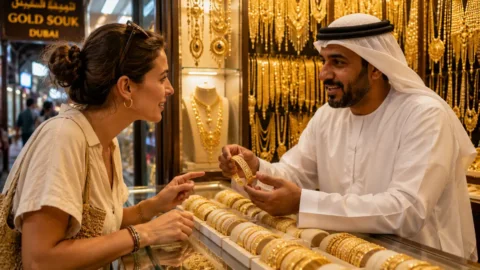
Shopping at Souq Waqif is more fun when you can ask the price, show interest, and negotiate without turning the conversation into a contest. Not every price is negotiable, and...




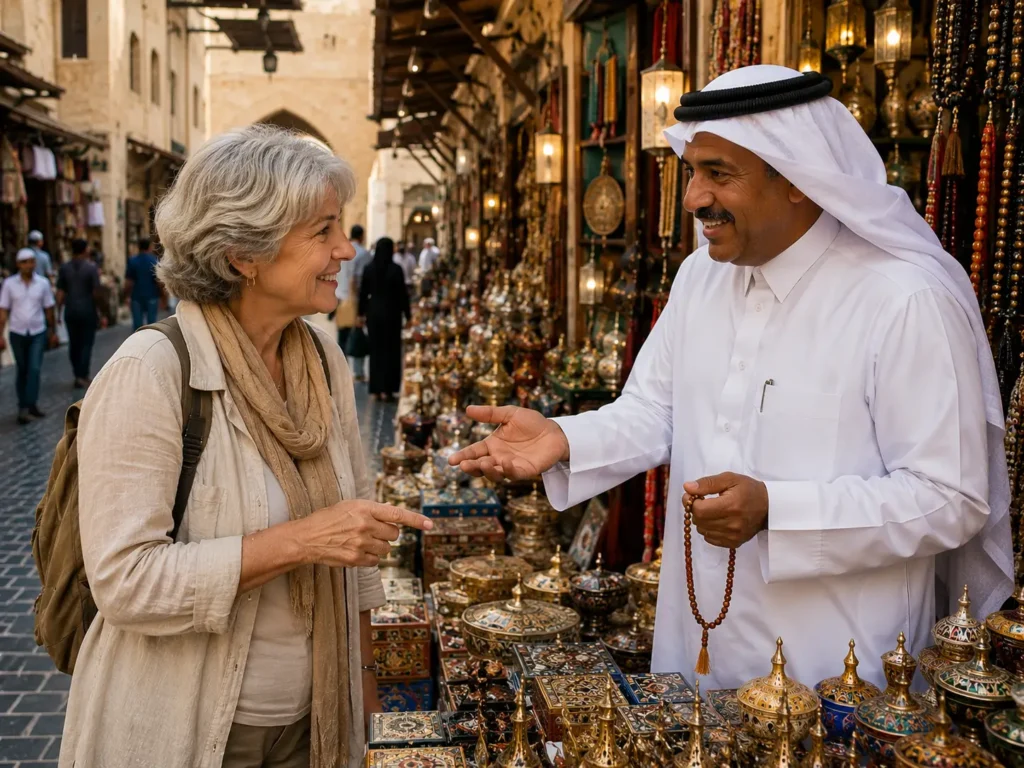
Shopping at Souq Waqif is more fun when you can ask the price, show interest, and negotiate without turning the conversation into a contest.
Not every price is negotiable, and some shops may have fixed prices. But when bargaining is part of the exchange, a few Gulf Arabic phrases can help you keep it friendly.
Start with a greeting, ask clearly, smile, and only bargain for something you are genuinely considering buying.
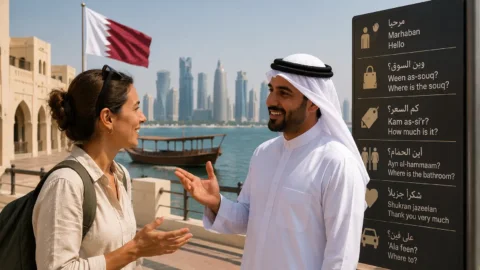
Useful Arabic Phrases for Souq Waqif
| Arabic | English | Say it |
|---|---|---|
| السلام عليكم | Hello / Peace be upon you | Assalam alaikum |
| بكم هذا؟ | How much is this? | Bkam hatha |
| غالي شوي | It’s a little expensive | Ghali shway |
| ممكن أقل شوي؟ | Can you make it a little cheaper? | Mumkin aqall shway |
| شكثر آخر سعر؟ | What’s your final price? | Shkither akher sear |
| عندك أرخص؟ | Do you have something cheaper? | Andak arkhas |
| بس أتفرج | I’m just looking | Bass atfarraj |
| ما أبيه، شكراً | I don’t want it, thank you | Ma abeeh shukran |
| باخذ هذا | I’ll take this | Bakhith hatha |
| مشكور | Thank you | Mashkoor |
Start With the Price
When something catches your eye, greet the seller first with السلام عليكم, meaning “Hello” or “Peace be upon you.” Say it: Assalam alaikum.
Then point to the item and ask بكم هذا؟, meaning “How much is this?” Say it: Bkam hatha.
Wait for the answer before making an offer. If you have trouble catching the number, asking the seller to show it on a calculator or phone can make things easier.
If It Feels Expensive
You do not need a dramatic reaction.
Smile and say غالي شوي, meaning “It’s a little expensive.” Say it: Ghali shway.
That keeps the conversation light while letting the seller know the price is higher than you expected.
If bargaining seems appropriate, follow with ممكن أقل شوي؟, meaning “Can you make it a little cheaper?” Say it: Mumkin aqall shway.
The key word here is “a little.” It sounds friendly and gives the seller room to respond.
Ask for the Final Price
If you actually want the item, ask شكثر آخر سعر؟, meaning “What’s your final price?” Say it: Shkither akher sear.
This works best once you have already discussed the price and are close to deciding.
If the item is still outside your budget, ask عندك أرخص؟, meaning “Do you have something cheaper?” Say it: Andak arkhas.
The seller may show you another size, style, or version rather than simply reducing the same price.
When You Are Only Browsing
Souq Waqif is made for wandering, so you will probably enter plenty of shops without planning to buy.
Say بس أتفرج, meaning “I’m just looking.” Say it: Bass atfarraj.
It is a useful way to stay friendly while giving yourself space to browse.
If you decide you are not interested, say ما أبيه، شكراً, meaning “I don’t want it, thank you.” Say it: Ma abeeh shukran.
There is no need for a long explanation. Thank the seller and keep exploring.
When You Are Ready to Buy
Once the price feels fair and you want the item, say باخذ هذا, meaning “I’ll take this.” Say it: Bakhith hatha.
Before paying, make sure you understand the total, especially if you are buying several things.
Finish with مشكور, meaning “Thank you.” Say it: Mashkoor.
A friendly ending matters more than squeezing every possible amount out of the negotiation.
Bargain Without Making It Awkward
At Souq Waqif, think of bargaining as a conversation rather than a battle.
Ask the price. Make a reasonable counteroffer if the setting allows it. If you cannot agree, smile and move on. You can always compare similar items elsewhere in the souq.
Remember بكم هذا؟, meaning “How much is this?” Say it: Bkam hatha. Then try ممكن أقل شوي؟, meaning “Can you make it a little cheaper?” Say it: Mumkin aqall shway.
Those two phrases are enough to make shopping feel more local, relaxed, and enjoyable.
Travel information can change. Recheck important prices, schedules, entry rules, health requirements and local regulations with the relevant official source before relying on them.