Marrakech Darija: 10 Phrases to Travel Like a Local
Marrakech is a city where a few words of Darija can go a long way. You might use them while ordering mint tea, asking the price in the souk, finding...




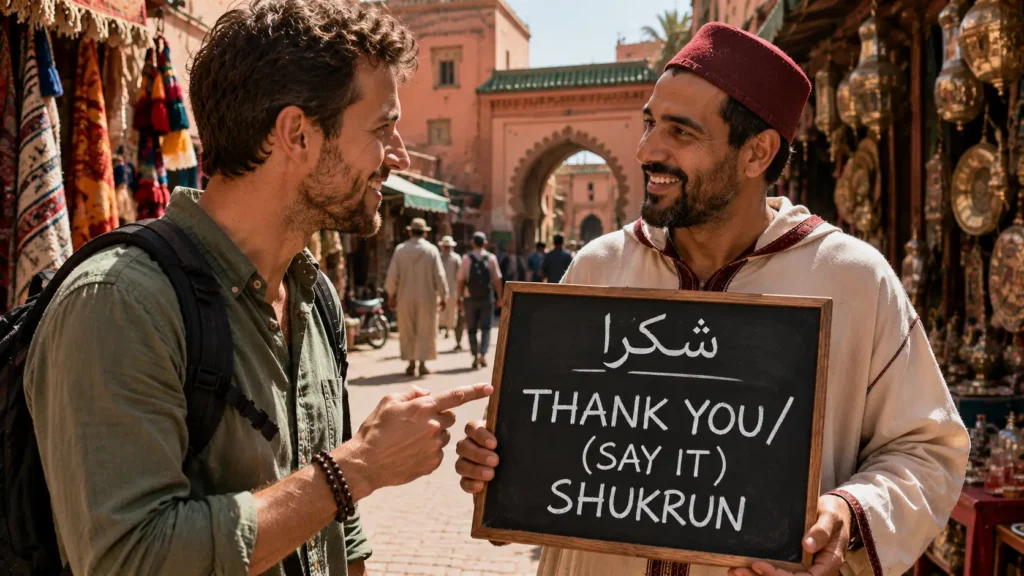
Marrakech is a city where a few words of Darija can go a long way.
You might use them while ordering mint tea, asking the price in the souk, finding your riad, or thanking someone who helped with directions. You do not need perfect pronunciation. Say the phrase, smile, and let the conversation happen.
These 10 Moroccan Darija phrases are useful for the everyday moments travelers actually experience in Marrakech.
10 Useful Marrakech Darija Phrases
| Arabic | English | Say it |
|---|---|---|
| سلام | Hello | Salam |
| لاباس؟ | How are you? / Everything good? | Labas |
| عافاك | Please / Excuse me | Aafak |
| شكرا | Thank you | Shokran |
| سمح ليا | Excuse me / Sorry | Smah liya |
| فين الحمام؟ | Where is the bathroom? | Feen l hammam |
| بشحال هادا؟ | How much is this? | Bshhal hada |
| غالي بزاف | That’s very expensive | Ghali bzzaf |
| بغيت أتاي، عافاك | I’d like tea, please | Bghit atay aafak |
| فين كاين هاد البلاصة؟ | Where is this place? | Feen kayn had lblasa |
Start With Salam
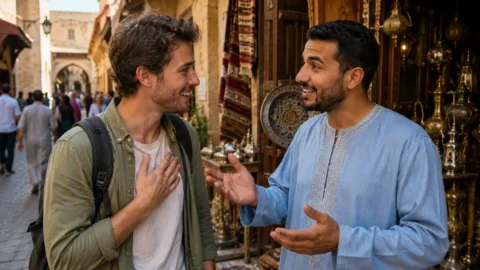
The easiest word to use in Marrakech is سلام, meaning “Hello.” Say it: Salam.
Use it when entering a small shop, greeting your riad host, meeting a driver, or starting a conversation in the souk. It is simple, friendly, and instantly useful.
You may also hear لاباس؟, meaning “How are you?” or “Everything good?” Say it: Labas.
A smile and a short answer are enough. You do not need to turn every greeting into a full conversation.
The Polite Word You Will Use Constantly
One of the most useful words in Moroccan Darija is عافاك, meaning “Please” or “Excuse me.” Say it: Aafak.
Use it when ordering food, asking a shopkeeper a question, getting someone’s attention, or speaking with a taxi driver.
If you accidentally bump into someone or want to get past politely, say سمح ليا, meaning “Excuse me” or “Sorry.” Say it: Smah liya.
And when someone helps you, شكرا, meaning “Thank you.” Say it: Shokran.
These three phrases can carry you through a surprising number of situations.
In the Souks
Shopping is one of the most enjoyable places to try your Darija.
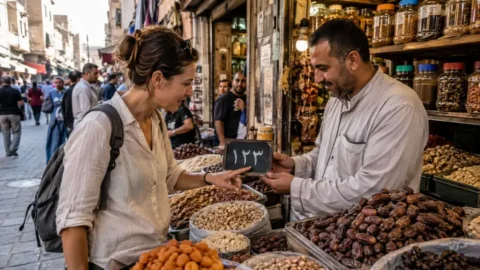
Point to something and ask بشحال هادا؟, meaning “How much is this?” Say it: Bshhal hada.
If the starting price feels high, you can smile and say غالي بزاف, meaning “That’s very expensive.” Say it: Ghali bzzaf.
Bargaining is common in many traditional souk shops, but keep it light. Ask the price, make an offer if you are genuinely interested, and enjoy the exchange. If you decide not to buy, a friendly thank-you is enough.
Tea, Cafes and Small Breaks
Mint tea is part of the rhythm of Marrakech, from riads to cafes and small shops.
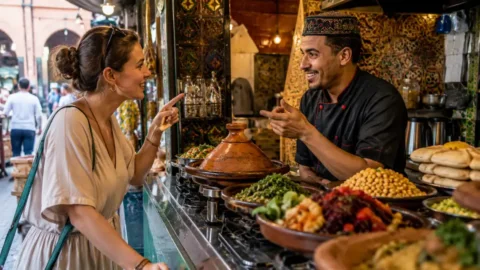
To order it, say بغيت أتاي، عافاك, meaning “I’d like tea, please.” Say it: Bghit atay aafak.
Even if the server speaks English or French, trying the local phrase can make the interaction feel more personal.
Take your time with tea. Marrakech can be intense on the senses, so a cafe stop is often a good chance to sit, watch the street, and enjoy the city rather than rushing through it.
Finding Your Way
The medina can make even a good sense of direction feel unreliable.
If you need the bathroom, ask فين الحمام؟, meaning “Where is the bathroom?” Say it: Feen l hammam.
If you are trying to find your riad, a restaurant, or another address, show the location on your phone and ask فين كاين هاد البلاصة؟, meaning “Where is this place?” Say it: Feen kayn had lblasa.
Pointing at the name or map while you speak makes the question easy to understand.
Enjoy the Interaction
Darija in Marrakech is not about sounding perfect. It is about joining the moment.
Say hello when you enter a shop. Order your tea yourself. Ask the price in Darija. Thank the person who gives you directions.
Start with سلام, meaning “Hello.” Say it: Salam. Add عافاك, meaning “Please.” Say it: Aafak. Finish with شكرا, meaning “Thank you.” Say it: Shokran.
Those three alone can make everyday travel in Marrakech feel warmer and more connected.
Travel information can change. Recheck important prices, schedules, entry rules, health requirements and local regulations with the relevant official source before relying on them.